
Friday, January 22, 2010
Nod of the Miter Goes To . . .
Stephen Colbert and his famous Report for deciding to put Bishop Matthew Clark "on notice." That's a step that even we at Cleansing Fire haven't taken.


Thursday, January 21, 2010
Can't Hold Back the Spring
It's true.
You can't.


You can't.
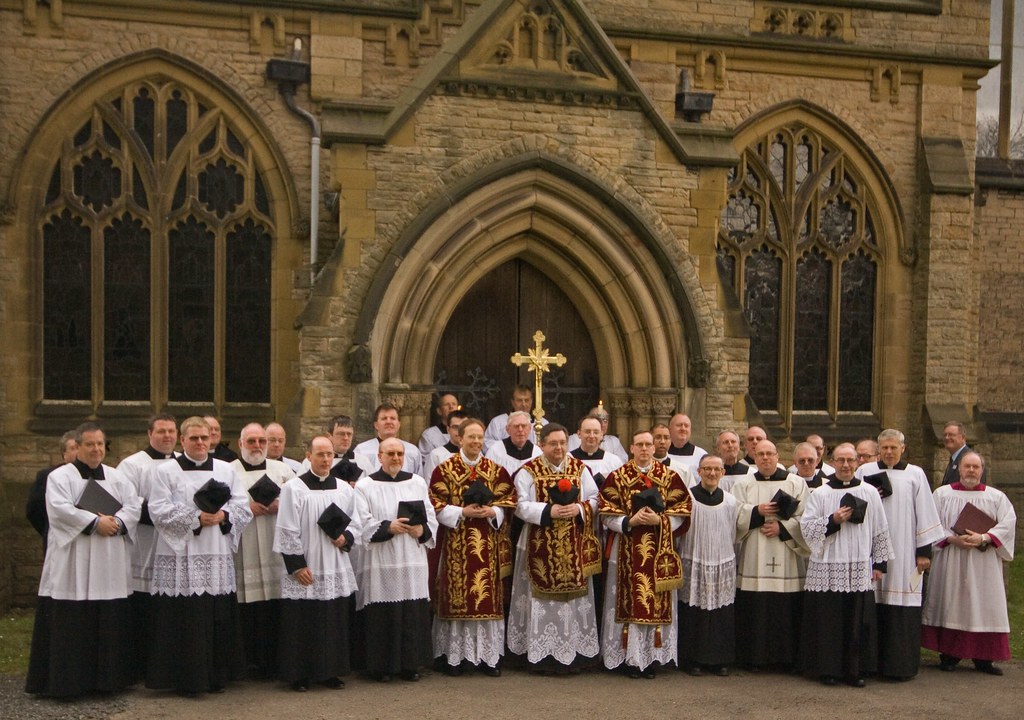
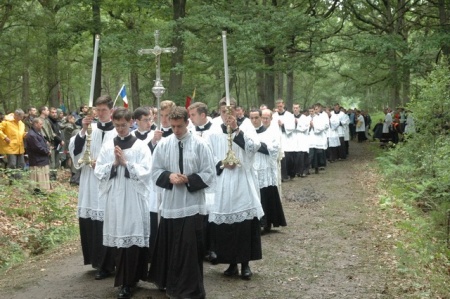
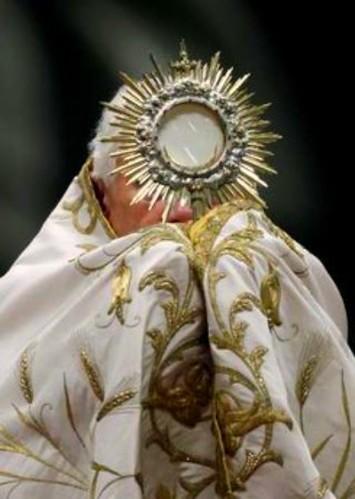
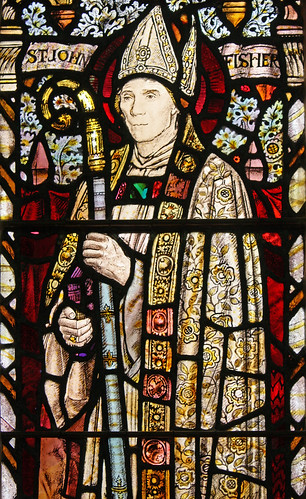
(Top image is from England, "Mary's Dowry," and the bottom is from France.)
For anyone who's not entirely sure what this is supposed to mean, just click here to figure it out. Note the second item you can buy. Also, nod of the miter to the people of Spiritus Christi for rebelling, not only against the tyrany of the male-dominated Church, but for rebelling also against proof-reading:
Pioneer Priest (2007)- A Catholic (sorry, no) woman, Mary
Ramerman, becomes the Rosa Park’s (should be "Rosa Parks," no apostrophe) of the Catholic Wmoen’s (I thought women's was spelled "womyn's.")
movement. Read How (no capitalization) her ordination pushed the Catholic Church to
ordain women priests. (It hasn't. It's led to the alienation of souls from the Church. And not that many, either. Let's let them trim back the shrub of the faithful, so that once it blooms again, it will do so more fully and more radiantly.)
The Te Deum - Part II
We now move onwards to the next words of the Te Deum:
So what have we to glean from these few sentences? For one thing, we should note that "omnes Angeli," "all the angels," sing the glory of God. Their unending hymn of praise, which should soundly wholly familiar to every Catholic who reads this: Sanctus, Sanctus, Sanctus, Dominus Deus Sabaoth. Holy, Holy, Holy Lord, God of Sabaoth.
Here is where there may be a disconnect for us. We always substitute the word "Sabaoth" with the words "power and might." The vast majority of English translations of the Mass, both pre-conciliar and post-conciliar, use this translation. What does "Sabaoth" mean?
 It is from Hebrew, one of the tongues of the Bible. Therefore, its use as a word in reference to religious themes is pre-Christian, pre-Early Church. It was brought in, unadulterated, by the first Christians who were, in reality, Jews who had embraced Our Lord as saviour. It is an ancient term, and one whose meaning will have the liberals braying like donkeys. It means "armies." Literally, "hosts," as in "warriors." There are many out there who hold the people of the Early Church in such high regard that their true messages, their true liturgy, their true prayers, are obscured by political agendas. That is shameful. You aren't going to find evidence for married priests or women priests in the catacombs. If there is any fresco whose appearance seems to say "yes, they existed," consider this: error has existed since Eve bit into the apple. Just because there may be evidence (there is not any valid evidence) does not mean that we should venerate it as the Truth.
So, even in the earliest days of the Church, there was a spirit of majestic warfare, "spiritually-majestic," mind you. The early Christians were pacifists for the most part. Consider that many Jews turned from Our Lord when He made it clear He was the Prince of Peace, not of war. So why conjure up images of a celestial army of angels, of cherubim and seraphim, if we're not going to use it?
It is a testament to the power and glory of God. What King has no army at his command? What Queen sits upon her throne without any guarantor of her authority? We should recall that there was a battle in Heaven, a battle between angels, as to the power of God. Satan and his minions dared to question God's power - they wanted it for their own edification. This heavenly host, this army, "Sabaoth," was that with which God crushed Satan, and sent him and his evil followers into the regions of Hell.
This victorious throng, this army of angels, praises God for His glory. We echo their hymn of praise every single Sunday when we chant or say the "Holy, Holy," the "Sanctus." What a profound linkage between heaven and earth, that we can join the angels in their hymn of praise, and offer to God, with one voice, all the glory due His name.
English: To thee all Angels cry aloud :
the Heavens, and all the Powers therein.
To thee Cherubim and Seraphim
continually do cry,
Holy, Holy, Holy :
Lord God of Sabaoth;
Heaven and earth are full of the Majesty
of thy glory.
the Heavens, and all the Powers therein.
To thee Cherubim and Seraphim
continually do cry,
Holy, Holy, Holy :
Lord God of Sabaoth;
Heaven and earth are full of the Majesty
of thy glory.
Latin: Tibi omnes Angeli;
tibi caeli et universae Potestates;
Tibi Cherubim et Seraphim
incessabili voce proclamant:
Sanctus, Sanctus, Sanctus,
Dominus Deus Sabaoth.
Pleni sunt caeli et terra
maiestatis gloriae tuae.
tibi caeli et universae Potestates;
Tibi Cherubim et Seraphim
incessabili voce proclamant:
Sanctus, Sanctus, Sanctus,
Dominus Deus Sabaoth.
Pleni sunt caeli et terra
maiestatis gloriae tuae.
Here is where there may be a disconnect for us. We always substitute the word "Sabaoth" with the words "power and might." The vast majority of English translations of the Mass, both pre-conciliar and post-conciliar, use this translation. What does "Sabaoth" mean?
 It is from Hebrew, one of the tongues of the Bible. Therefore, its use as a word in reference to religious themes is pre-Christian, pre-Early Church. It was brought in, unadulterated, by the first Christians who were, in reality, Jews who had embraced Our Lord as saviour. It is an ancient term, and one whose meaning will have the liberals braying like donkeys. It means "armies." Literally, "hosts," as in "warriors." There are many out there who hold the people of the Early Church in such high regard that their true messages, their true liturgy, their true prayers, are obscured by political agendas. That is shameful. You aren't going to find evidence for married priests or women priests in the catacombs. If there is any fresco whose appearance seems to say "yes, they existed," consider this: error has existed since Eve bit into the apple. Just because there may be evidence (there is not any valid evidence) does not mean that we should venerate it as the Truth.
So, even in the earliest days of the Church, there was a spirit of majestic warfare, "spiritually-majestic," mind you. The early Christians were pacifists for the most part. Consider that many Jews turned from Our Lord when He made it clear He was the Prince of Peace, not of war. So why conjure up images of a celestial army of angels, of cherubim and seraphim, if we're not going to use it?
It is a testament to the power and glory of God. What King has no army at his command? What Queen sits upon her throne without any guarantor of her authority? We should recall that there was a battle in Heaven, a battle between angels, as to the power of God. Satan and his minions dared to question God's power - they wanted it for their own edification. This heavenly host, this army, "Sabaoth," was that with which God crushed Satan, and sent him and his evil followers into the regions of Hell.
This victorious throng, this army of angels, praises God for His glory. We echo their hymn of praise every single Sunday when we chant or say the "Holy, Holy," the "Sanctus." What a profound linkage between heaven and earth, that we can join the angels in their hymn of praise, and offer to God, with one voice, all the glory due His name.
Wednesday, January 20, 2010
The Scarlet and the Black - Metaphor Alert
I have posted a new video on our YouTube channel. It is from a wonderful movie called "The Scarlet and the Black," which stars Gregory Peck and Christopher Plummer. It is a story, a true story, about an Irish monsignor, i.e. Peck, hiding and shuttling allied P.O.W's and Jews in and around the Vatican. It is an amazing film. I highly recommend it.
This is a scene which some among you have suggested is a perfect metaphor for our dealings here at Cleansing Fire. We straddle the border between safety and security for the sake of Truth.
I leave any further metaphor to you.
And, yes, I really do look like Gregory Peck. No, really. I do.
This is a scene which some among you have suggested is a perfect metaphor for our dealings here at Cleansing Fire. We straddle the border between safety and security for the sake of Truth.
I leave any further metaphor to you.
And, yes, I really do look like Gregory Peck. No, really. I do.
We Are David, and the Rosary is Our Weapon
Throughout the twenty centuries in which our Church has existed, there has seldom been a moment where we weren't persecuted somewhere in the world. While people battled against the hostile natives of far-off lands and with the European Wars of the Reformation, they also battled against and were besieged by heresy and dissidence. The pope himself was a veritable prisoner inside the Vatican from the 1860's until 1927 and the Lateran Treaty. However, through all this time and all these circumstances, two things have been true. We are David. The Rosary is our weapon.
The reading today shows the timidity of Saul, King of Israel, when confronted by David who, because his faith was strong and true, had the courage to slay the enemy. Through his faith and persistence, though, David wins out with Saul. He promptly goes out into the arena of history to do battle with the Philistine giant, Goliath. We all encounter Goliaths in our lives, some physical, some ecclesiastical, some emotional, some a little of each. However, we must not forget that we, the people of God, are David.

We are told "there's nothing you can do. Just wait." Well, that's true. But in that wait, we can do one thing which is more potent than anything else in human experience: we can pray. Our Lady gave us her heavenly slingshot, the Most Holy Rosary, as a means to affect change, to blot out the evil influences and manifestations of the Evil One, and to conquer for Christ. Why else would we so humbly call her "Our Lady of Victories?" She has shown, time and time again, the power and the majesty that is the Rosary. This prayer is often attacked as being "too old-fashioned," "un-Biblical," "shallow in its understanding of the faith." Those labels are incorrect in each instance. The Church is timeless. Her sacraments are timeless. Her sacramentals are timeless. Her Founder is timeless. His Mother is timeless, being assumed body and soul into Heaven to reign over that glorious realm and our own.
So, as David, and armed with prayer and the Holy Rosary, we can assail the scourges of evil with Christ-like zeal. We must not be silent, and we must not roll-over in face of evil. And, no, to call things such as liturgical abuse evil is not a stretch. The Mass is a Heavenly sacrifice - "Almighty God, we pray that your angel may take this sacrifice to Your altar in heaven." It is simple - one does not change the Mass for political or social agendas. Believe what you want, but leave that belief in thought, not action, and let it fall by the wayside when you present yourself for Holy Communion. Sin has no place at the table of the Lord, nor do liturgical abusers.
Just as David flung the rocks of God's Divine Grace at the wretched giant, so too may we fling our prayers and our every moment of silent adoration towards the purpose of eradicating selfishness and pride from our liturgies. Pray the Rosary for the sinner. May he be smitten with God's Grace and find himself face-first before the supreme Judge. May he revel in humility and may he be cleansed. Prayer is a monumental gift. It would be a sin not to use it to its full potential. For what good can come from apathy? The only way to remove infidelity is to pray. Violence, anger, resentment - these are not Godly weapons. The Rosary is. Use it wisely.
The reading today shows the timidity of Saul, King of Israel, when confronted by David who, because his faith was strong and true, had the courage to slay the enemy. Through his faith and persistence, though, David wins out with Saul. He promptly goes out into the arena of history to do battle with the Philistine giant, Goliath. We all encounter Goliaths in our lives, some physical, some ecclesiastical, some emotional, some a little of each. However, we must not forget that we, the people of God, are David.

So, as David, and armed with prayer and the Holy Rosary, we can assail the scourges of evil with Christ-like zeal. We must not be silent, and we must not roll-over in face of evil. And, no, to call things such as liturgical abuse evil is not a stretch. The Mass is a Heavenly sacrifice - "Almighty God, we pray that your angel may take this sacrifice to Your altar in heaven." It is simple - one does not change the Mass for political or social agendas. Believe what you want, but leave that belief in thought, not action, and let it fall by the wayside when you present yourself for Holy Communion. Sin has no place at the table of the Lord, nor do liturgical abusers.
Just as David flung the rocks of God's Divine Grace at the wretched giant, so too may we fling our prayers and our every moment of silent adoration towards the purpose of eradicating selfishness and pride from our liturgies. Pray the Rosary for the sinner. May he be smitten with God's Grace and find himself face-first before the supreme Judge. May he revel in humility and may he be cleansed. Prayer is a monumental gift. It would be a sin not to use it to its full potential. For what good can come from apathy? The only way to remove infidelity is to pray. Violence, anger, resentment - these are not Godly weapons. The Rosary is. Use it wisely.
Our Lady of the Most Holy Rosary, pray for us.
Our Lady of Victories, pray for us.
Our Lady of Perpetual help, pray for us.
Remember, O most gracious Virgin Mary, that never was it known that anyone who fled to thy protection, implored thy help, or sought thine intercession was left unaided.
Inspired by this confidence, I fly unto thee, O Virgin of virgins, my mother; to thee do I come, before thee I stand, sinful and sorrowful. O Mother of the Word Incarnate, despise not my petitions, but in thy mercy hear and answer me.
Amen.
Tuesday, January 19, 2010
Catholics Burn Down Muslim Mosque
Oh, wait. I got that backwards.
Now, this article was pretty vague about the details of the riots. It sounds like it's going both ways (bodies stacked in mosques). However, it also seems that the Christians (specifically, Catholics) were the ones who were targetted first, and who are now defending themselves. I could be wrong, so don't start chanting "Lectio sancti evangelii secundum Gen-um."
But seriously, what do you think? For such a "peaceful" religion, Islam certainly seems to be disproportionally violent when compared to Christianity. Is the press doing this? Are a few bad apples doing this? Are Catholics secretly instigating this, meeting in caves in Pakistan and plotting the domination of the world for the name of Jesus? Oh, silly me, got that backwards again. Mea culpa.
OS, Nigeria – Religious violence between Christians and Muslims erupted again Tuesday in central Nigeria, and the state government called for more military units to enter the city where rioters have killed at least 27 people.
Security forces issued a 24-hour curfew after police and soldiers tried to contain the violence with roadblocks and searches but apparently failed. An Associated Press reporter could see smoke rising from the north side of Jos and could hear the sounds of gunshots echoing along the streets.
The rioting began Sunday after Muslim youths set a Catholic church ablaze. Witnesses said rioters armed with knives, homemade firearms and stones attacked passers-by and fought with security forces, leaving bodies in the street and stacked in local mosques.
The Minister of Police Affairs, Ibrahim Yakubu Lame, issued a statement Tuesday blaming the violence on "some highly placed individuals in the society who were exploiting the ignorance and poverty of the people to cause mayhem in the name of religion."
Jos, the capital of Plateau State, has a history of community violence that has made elections difficult to organize. Rioting in September 2001 killed more than 1,000 people and Muslim-Christian battles killed up to 700 people in 2004. More than 300 residents died during a similar uprising in 2008.
The city is situated in Nigeria's "middle belt," where dozens of ethnic groups mingle in a band of fertile and hotly contested land separating the Muslim north from the predominantly Christian south.
While religious violence does happen in Nigeria, it normally has its roots in local issues, rather than influence from international extremist groups.
Sani Mudi, a spokesman for the local imam, said there were about two hours of fighting on Tuesday morning.
"We could hear gunshots all over the area," said Mudi, who said he saw police moving about the area with soldiers from where he was hiding inside his home.
Mohammed Larema, a local police spokesman, said that security forces had brought the fighting to a halt and that the situation was under control.
However, the state government called for additional military units to enter the city. A major general for a Nigerian armored division toured part of Jos on Tuesday to see what would be needed.
"The situation is bad and the federal government is yet to deploy the troops requested," said Gregory Yenlong, a state spokesman.
Mudi, the spokesman for the local imam, has said 22 people died Sunday and more than 300 people were wounded in the fighting. Five others died Monday from their wounds, Mudi said.
Local Red Cross officials have said that 5,000 people have been displaced by the rioting.
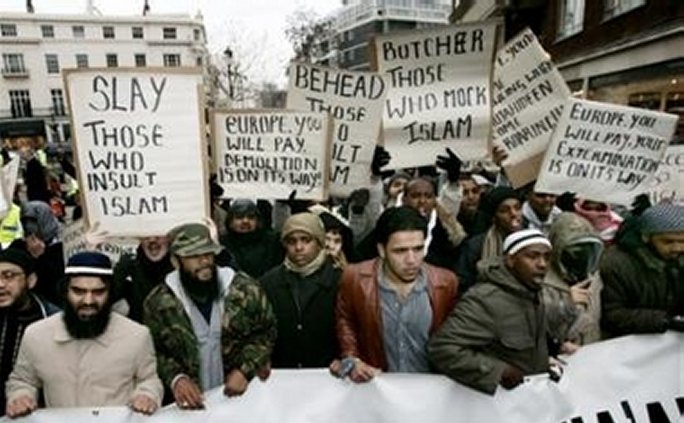
Now, this article was pretty vague about the details of the riots. It sounds like it's going both ways (bodies stacked in mosques). However, it also seems that the Christians (specifically, Catholics) were the ones who were targetted first, and who are now defending themselves. I could be wrong, so don't start chanting "Lectio sancti evangelii secundum Gen-um."
But seriously, what do you think? For such a "peaceful" religion, Islam certainly seems to be disproportionally violent when compared to Christianity. Is the press doing this? Are a few bad apples doing this? Are Catholics secretly instigating this, meeting in caves in Pakistan and plotting the domination of the world for the name of Jesus? Oh, silly me, got that backwards again. Mea culpa.
Photo Caption Contest
You know the drill. Keep it clean. Keep it orthodox.
Winner gets five Cleansing Fire prayer cards!

Winner gets five Cleansing Fire prayer cards!

The Te Deum
Over the next several days, I should like very much to look upon the words of the Te Deum, the ancient hymn of Thanksgiving to God, our Father. I will post two versions, side by side - the original Latin version, and the translation found in the Book of Common Prayer. I have perused it and, unlike other BoCP translations, it still captures the essence of the Latin. We were recently scolded for not being "ecumenical." Maybe this can calm our critics.
Regardless, we will start today with the opening words:
I have noticed, in listening to this piece arranged by numerous composers, that many treat this hymn as a creed. And I can definitely see how that is possible. It begins, not with the gentle platitudes of most contemporary professions of faith, but with a clear sense of praising God, acknowledging Him to be supreme over all the Earth. There's no fear about offending this group or that - we confirm our love for God, and his authority over all the Earth and everything and everyone upon it. It also states that all the Earth, "omnis terra," praises Him, and confesses Him to be "everlasting." What clearer statement is there than, "We praise God, a God who is everlasting, and whom all the world venerates"? Not many. Not many at all.
It takes a great deal of faith to acknowledge Him "to be the Lord." In declaring this sentiment to be our own, we show a clear and undeniable belief: Jesus is God, and He is supreme. Both Jews and Muslims believe in the one God, the same "Father" in the Trinity. However, they do not acknowledge Jesus Christ, conceived by the Holy Ghost and born of the Virgin Mary, to be God. They cut themselves off from Our Lord, who is ready and waiting to be embraced by all. In years past, present, and future, Christians who live their lives by the simple elegance of the Te Deum have found themselves berated, attacked, martyred for "acknowledging" God to be supreme. We don't rely on only the saintly prophets of old, nor do we rely on a nomadic pagan-turned-monotheist to be the conclusive word on God. We leave God to do that. I am not attacking our world neighbors or their views. I am simply stating what a Christian believes. To profess a faith, no matter how politically correct you may try to be, you silently deny the authority and authenticity of others. I'm sorry, but that's the way it is.
Hindus, though, believe that there are innumerable paths to final fulfillment, and that you should be the best follower of whatever religion you discern to be the best for you. This is perhaps the greatest "theological cop-out" I have ever studied. "We believe A, but B, C, D, E, F, are also valid. We all end up in the same place."
Well guess what - we don't. There is such a thing as the final judgment. I do not claim to know the "secrets of men's hearts," but I do profess a belief in a God who is infinitely loving, but who will not be mocked by those whom he loves. What parent wouldn't want to lash out when his or her child looks him or her in the face and says, "You're not my parent. I don't believe in you." The parent loves the child, yes, but there is a clear sense of injury. And we have seen in the Sacred Scriptures what happens to people who injure God's being and majesty - Lot's wife turned into a pillar of salt, the people of Sodom and Gomorrah destroyed for their unbridled homosexuality and rampant hyper-sexuality of all kinds, Adam and Eve being exiled from Eden. Sin is punished. Willfully and knowingly and exuberantly denying God is a sin.

And so we, in the spirit of the Te Deum, acknowledge God to be supreme, reigning over all with more authority and majesty than can be conceived of by our merely human intellect. Bow before Our God, and give Him the glory due His Name.
Regardless, we will start today with the opening words:
Eng: We praise thee, O God :
we acknowledge thee to be the Lord.
All the earth doth worship thee :
the Father everlasting.
we acknowledge thee to be the Lord.
All the earth doth worship thee :
the Father everlasting.
Latin: Te Deum laudamus:
te Dominum confitemur.
Te aeternum Patrem
omnis terra veneratur.
te Dominum confitemur.
Te aeternum Patrem
omnis terra veneratur.
I have noticed, in listening to this piece arranged by numerous composers, that many treat this hymn as a creed. And I can definitely see how that is possible. It begins, not with the gentle platitudes of most contemporary professions of faith, but with a clear sense of praising God, acknowledging Him to be supreme over all the Earth. There's no fear about offending this group or that - we confirm our love for God, and his authority over all the Earth and everything and everyone upon it. It also states that all the Earth, "omnis terra," praises Him, and confesses Him to be "everlasting." What clearer statement is there than, "We praise God, a God who is everlasting, and whom all the world venerates"? Not many. Not many at all.
It takes a great deal of faith to acknowledge Him "to be the Lord." In declaring this sentiment to be our own, we show a clear and undeniable belief: Jesus is God, and He is supreme. Both Jews and Muslims believe in the one God, the same "Father" in the Trinity. However, they do not acknowledge Jesus Christ, conceived by the Holy Ghost and born of the Virgin Mary, to be God. They cut themselves off from Our Lord, who is ready and waiting to be embraced by all. In years past, present, and future, Christians who live their lives by the simple elegance of the Te Deum have found themselves berated, attacked, martyred for "acknowledging" God to be supreme. We don't rely on only the saintly prophets of old, nor do we rely on a nomadic pagan-turned-monotheist to be the conclusive word on God. We leave God to do that. I am not attacking our world neighbors or their views. I am simply stating what a Christian believes. To profess a faith, no matter how politically correct you may try to be, you silently deny the authority and authenticity of others. I'm sorry, but that's the way it is.
Hindus, though, believe that there are innumerable paths to final fulfillment, and that you should be the best follower of whatever religion you discern to be the best for you. This is perhaps the greatest "theological cop-out" I have ever studied. "We believe A, but B, C, D, E, F, are also valid. We all end up in the same place."
Well guess what - we don't. There is such a thing as the final judgment. I do not claim to know the "secrets of men's hearts," but I do profess a belief in a God who is infinitely loving, but who will not be mocked by those whom he loves. What parent wouldn't want to lash out when his or her child looks him or her in the face and says, "You're not my parent. I don't believe in you." The parent loves the child, yes, but there is a clear sense of injury. And we have seen in the Sacred Scriptures what happens to people who injure God's being and majesty - Lot's wife turned into a pillar of salt, the people of Sodom and Gomorrah destroyed for their unbridled homosexuality and rampant hyper-sexuality of all kinds, Adam and Eve being exiled from Eden. Sin is punished. Willfully and knowingly and exuberantly denying God is a sin.
And so we, in the spirit of the Te Deum, acknowledge God to be supreme, reigning over all with more authority and majesty than can be conceived of by our merely human intellect. Bow before Our God, and give Him the glory due His Name.
Let's Try It Again

Seeing as how I forgot to include many parishes when I put the poll up about "what parish do you attend," I rewrote it and posted it at right. Please feel free to vote. I included every Rochester parish, and only omitted some of the rural parishes, smaller worship communities, etc . . . Nothing against our friends in the southern tier, but I think that most of us will find our parishes in the list I have posted.
Monday, January 18, 2010
Catholic Vocabulary - But Not Really
 The following is as it appeared in Rochester's Catholic Courier in October. My comments are, as usual, in red. All emphasis is mine. Just for fun, why don't we count the number of times they use the words "community" and "ministry." It was been suggested to me that the diocese should define the difference between "ministry" and "min-ith-try." If you don't get it, say it out loud and picture rainbow flags.
The following are definitions of some commonly used pastoral-planning and parish-leadership terms:
Pastoral-planning terms
Cluster: A parish structure in which two or more parishes are served by a single pastor, pastoral administrator or pastoral team, but in which each parish retains its own identity according to both church and civil law. Ministry programs and staffing can be autonomous within each parish or may involve partnerships with other members of the cluster. Typically clusters move toward a more integrated ministry.
Faith community: A generic term for any Catholic community that gathers together for word, worship, community and service (what about Mass? Do they gather for that little thing?)-- e.g., parishes, campus ministries, migrant ministries.
Parish: A community of the Christian (we're not just Christian - we're Catholic. Why are we afraid to say what we truly are?) faithful stably constituted whose pastoral care is entrusted to a pastor under the authority of the diocesan bishop.
Merged parish: Two or more parishes consolidated into a single entity under church and civil law.
Parish with multiple worship and ministry sites: Typically (????) this structure results from the combination of two or more parishes into a single parish. While the physical facilities of the previous parishes can be used as worship and/or ministry sites, there is only one parish and a single faith community.
Planning group: A term used within the Diocese of Rochester to refer to one of the 36 groups of parishes and faith communities organized since the program Pastoral Planning for the New Millennium began in 1997. Members of each planning group work together to develop and implement pastoral plans regarding parish configuration, utilization of priests and collaborative ministries. (That should be the job of the clergy. The Church is NOT a democracy. It never has, and never will be.)
Worship site: A term sometimes used to refer to a church and its surrounding property.
Parish-leadership terms
Parochial administrator: A priest appointed by the bishop and accountable to him for the pastoral care of a parish. Because he is not appointed for a designated term as is a pastor, this appointment has less stability than that of a pastor. (i.e. Our Lady of Victory)
Parochial vicar: A priest appointed by the bishop to assist a pastor in the pastoral care of a parish.
Pastoral leader: A generic term for the person who leads a parish -- a pastor, parochial administrator or pastoral administrator. (Note how we started off in black and white terms, and now we're drifting into the gray of Bishop Clark's imagined thesaurus.)
Priest pastor: A priest appointed by the bishop and accountable to him for the pastoral care of a parish. Under canon law only a priest can be designated the "pastor" of a parish. (A phrase obviously thrown in to appease those people, ahem, us, who demand that the DoR follow Canon Law.)
Permanent deacon: A permanent deacon is trained and ordained for service to the diocese. Deacons are ministers of word, sacrament and charity. They proclaim the Gospel and preach; preside at baptisms, wakes, funerals and Communion services (these are of dubious legality - many dioceses have put restrictions on these); witness marriages; assist at Mass; and serve as ministers of charity and justice. (Was that really necessary to include? Enough fluff.) They also can serve as pastoral administrators.
Pastoral administrator: People (i.e. "anyone") who are not priests but are appointed by the bishop to be accountable to him (not to the people or to God) for the pastoral care of a parish in accord with Canon 517.2. (From Ecclesiae de mysterio: " The right understanding and application of this canon, according to which "Si ob sacerdotum penuriam Episcopus dioecesanus aestimaverit participationem in exercitio curae pastoralis paroeciae concredendam esse diacono aliive personae sacerdotali charactere non insignitae aut personarum communitati, sacerdotem constituat aliquem qui, potestatibus et facultatibus parochi instructus, curam pastoralem moderetur b) this is participatio in exercitio curae pastoralis and not directing, coordinating, moderating or governing the Parish; these competencies, according to the canon, are the competencies of a priest alone." That means NOT running a parish, folks. The Diocese of Rochester can't even follow the documents they cite. How pathetic is that?) Pastoral administrators serve as pastors in every way except that they do not celebrate the sacraments, which are reserved to those who are ordained. If judged qualified, a deacon could be appointed a pastoral administrator and thus could celebrate the sacraments of baptism and matrimony. (Isn't this the obvious answer? Look at St. Stephen and the other early deacons - this discription is exactly what they were doing. They did not defer to nuns in albs or married women masquerading as priests.) Qualified (what qualifications?) women religious as well as qualified lay men and women also can be appointed pastoral administrators. When a parish is led by a pastoral administrator, a priest is appointed by the bishop as sacramental minister to celebrate the sacraments, especially Eucharist (again, they're afraid to use the word "Mass"). The pastoral administrator is not accountable to the sacramental minister, however, but rather to the bishop through a priest moderator. (What sense does this make? This means that a lay person, with minimal education in the Church could actually tell a priest how to celebrate the Mass. We have seen this truly enough at Good Shepherd, Guardian Angels, Saint Anne, Our Lady of Lourdes, etc . . . ad infinitem.) The sacramental minister, working in collaboration with the pastoral administrator, also is accountable to the bishop. (Isn't that obvious?)
Priest moderator: The priest appointed by the bishop to fulfill the canonical need for each parish to have a pastor.(I have a suspicion that no priest with true and undaunted courage has been appointed to this role. A toothless tiger, indeed.)
Sacramental minister: A priest assigned by the bishop to provide sacramental ministry for a parish that is led by a pastoral administrator. (Mass. Say the word already. It's what the Church is here for. Mass.) This is most often a part-time assignment given to retired priests or those who are performing full-time jobs within the diocese, either at the Pastoral Center or in a parish. In some cases, a sacramental minister is assigned full time to a parish.
Rochester is so absolutely backwards. Only a diocese as twisted as Rochester could willingly conceive of this kind of rhetoric. St. John Fisher, pray for us!
Fr. Barron Comments on Eucharistic Adoration
Seeing as how Eucharistic Adoration has come up in a few places here recently, I thought I should post this video. A nod of the miter to Fr. Barron for his simple eloquence and defense of this noble practice.
Sunday, January 17, 2010
The French Are Angry
For those of you who say with confidence that there is no hope for the Church in France, you are sadly mistaken.
Events have unfolded of late which point in the other direction. In the small, rural diocese of Evreux, in Normandy, France, a bishop has removed a priest from his parish for "a very good reason." No, the priest was not a pedophile. He was not embezzling Church funds. He did not slander the bishop. He did not break any law, be it civil or ecclesiastic.
He said the Latin Mass.
This priest, Fr. Michel, was the parish priest of Thiberville, a small town which embraces its faith very closely. When the bishop discovered that one of his priests was openly saying the Latin Mass, showing a clear and undeniable preference towards orthodoxy, he decided to remove him. During Mass on, what I am told, was the Feast of the Epiphany, the bishop visited the parish of Thiberville to explain his reasoning for firing the priest.
A riot broke out. No joke. Women stormed the pulpit, not to preach, but to push the bishop, physically, while shouting, "Why do you wear these?" (rainbow vestments) and "You should leave, not Fr. Michel!"
Watch the video. It's about 10 minutes long and in French, but you can figure out what's going on just by the absolutely tremendous reaction of the people to this brazen and hostile heterodoxy.
The way the people feel about Fr. Michel is how people in Rochester feel about someone like Fr. Antinarelli. You will see how it is most decidedly "his" parish. Everyone likes him. The church building is beautiful, and there is no controversy. However, the moment the bishop decides to impose heterodoxy, a literal riot breaks out. Towards the end of the video, you will see Fr. Michel back at his church. I presume the bishop backed down. Anyways, he starts his homily with the words, "I will say nothing of it." What a humble man, that in the face of such popular support for the Church and his parish, he will not bask in the glory. We need priests like Fr. Michel, who are orthodox, loved by their parishioners, and give the people a steady, unwavering love for Tradition and Truth.

Events have unfolded of late which point in the other direction. In the small, rural diocese of Evreux, in Normandy, France, a bishop has removed a priest from his parish for "a very good reason." No, the priest was not a pedophile. He was not embezzling Church funds. He did not slander the bishop. He did not break any law, be it civil or ecclesiastic.
He said the Latin Mass.
This priest, Fr. Michel, was the parish priest of Thiberville, a small town which embraces its faith very closely. When the bishop discovered that one of his priests was openly saying the Latin Mass, showing a clear and undeniable preference towards orthodoxy, he decided to remove him. During Mass on, what I am told, was the Feast of the Epiphany, the bishop visited the parish of Thiberville to explain his reasoning for firing the priest.
A riot broke out. No joke. Women stormed the pulpit, not to preach, but to push the bishop, physically, while shouting, "Why do you wear these?" (rainbow vestments) and "You should leave, not Fr. Michel!"
Watch the video. It's about 10 minutes long and in French, but you can figure out what's going on just by the absolutely tremendous reaction of the people to this brazen and hostile heterodoxy.
The way the people feel about Fr. Michel is how people in Rochester feel about someone like Fr. Antinarelli. You will see how it is most decidedly "his" parish. Everyone likes him. The church building is beautiful, and there is no controversy. However, the moment the bishop decides to impose heterodoxy, a literal riot breaks out. Towards the end of the video, you will see Fr. Michel back at his church. I presume the bishop backed down. Anyways, he starts his homily with the words, "I will say nothing of it." What a humble man, that in the face of such popular support for the Church and his parish, he will not bask in the glory. We need priests like Fr. Michel, who are orthodox, loved by their parishioners, and give the people a steady, unwavering love for Tradition and Truth.

The God of Our Fathers Gives Us Hope
I was moved by the simple beauty of this weekend's first reading, taken from the Book of Isaiah. Its theme is the vindication of the Holy City, Jerusalem, but its relevance to us is unmistakable. As Catholics, we are called to abandon our lukewarm attitudes, to address evils and controversies, not to pretend they will go away on their own terms. They won't. This reading, perfectly captures this spirit of faith, and states it with such eloquence as can not be of merely human origin.

For Zion’s sake I will not be silent,
for Jerusalem’s sake I will not be quiet,
until her vindication shines forth like the dawn
and her victory like a burning torch. Nations shall behold your vindication,
and all the kings your glory;
you shall be called by a new name
pronounced by the mouth of the LORD.
You shall be a glorious crown in the hand of the LORD,
a royal diadem held by your God.
No more shall people call you “Forsaken, “
or your land “Desolate, “
but you shall be called “My Delight, “
and your land “Espoused.”
For the LORD delights in you
and makes your land His spouse.
As a young man marries a virgin,
your Builder shall marry you;
and as a bridegroom rejoices in his bride
so shall your God rejoice in you.

Hail Christ, King of the World.
We will not rest silent until all the world adore Your Sacred Name.
Saturday, January 16, 2010
Tridentine High Mass on January 24th at 1:30 p.m.

The next Tridentine High Mass (Extraordinary Form) will be offered on January 24th at 1:30 p.m. This "Mass of the Ages" is celebrated in church Latin (not classical Latin). The priest and the congregation all face East (ad orientem). There are Latin-English missals available for your use. We have security guards, a handicapped elevator (accessible in the rear of the Church) and plenty of parking. We have restrooms available too.
Holy Communion is received kneeling at the Communion rail and can only be received on the tongue. Confessions will be heard after the Holy Sacrifice of the Mass. The celebrant will be the Reverend Dennis Bonsignore.
Our local schola - "Schola Roffensis" (Roffensis is Latin for Rochester) is under the direction of Joel Morehouse and they will sing the Latin Gregorian chant propers for the 3rd Sunday after Epiphany. The choir will sing parts of both William Byrd's Mass in 3 Voices and Tomas Luis deVictoria's "O Magnum Mysterium" Mass. The Offertory motet will be Giovanni Palestrina's "Dextera Domini" and for Communion "Cantate Domino" by Giovanni Croce. Palestrina is noted as the Father of Catholic Church music. The choir director and organist is Eastman School of Music student, John Morabito.
All are most welcomed to come and attend the "Mass of the Ages". Worship the way our ancestors did amid the beauty of Saint Stanislaus Church.
I would suggest that if this is your first Traditional Latin Mass to sit up front and just take it all in. You can, if you wish, try to follow along in the red missal, but that might be distracting to try and find your place in the missal. Sit quietly and listen, see and smell the incense. Close your eyes occasionally when the choir is singing. Meditate. Contemplate. Or, as many do, when the organist plays the postlude, just sit and prayerfully listen. Let the music touch your soul.
Both before and after Mass we try and keep an atmosphere of devotion; not commotion. If you have to talk, do it in a low voice, as people are praying.
So, this is an open invitation to all to come. Only Catholics who are sacramentally prepared may receive Holy Communion.
We love children. If you bring your family, sit way down front so the kids can see what's going on in the sanctuary. Nothing worse than being a short kid around a bunch of tall adults and you can't see what's going on. If the kids get twitchy and squirmy you can always take them to the back of the Church into the narthex. Crying babies is the music of a God-given life.
I hope to see many new faces, as well as the regular faces.
Click for the Gloria from the O Magnum Mysterium Mass. http://www.youtube.com/watch?v=7qYEYsvcScc&feature=related
Oremus pro invicem!
Friday, January 15, 2010
Experts Say Bible Written "Centuries Earlier"
Scientists have discovered the earliest known Hebrew writing - an inscription dating from the 10th century B.C., during the period of King David's reign.
The breakthrough could mean that portions of the Bible were written centuries earlier than previously thought. (The Bible's Old Testament is thought to have been first written down in an ancient form of Hebrew.)
Until now, many scholars have held that the Hebrew Bible originated in the 6th century B.C., because Hebrew writing was thought to stretch back no further. But the newly deciphered Hebrew text is about four centuries older, scientists announced this month.
"It indicates that the Kingdom of Israel already existed in the 10th century BCE and that at least some of the biblical texts were written hundreds of years before the dates presented in current research," said Gershon Galil, a professor of Biblical Studies at the University of Haifa in Israel, who deciphered the ancient text.
BCE stands for "before common era," and is equivalent to B.C., or before Christ.
So . . . if one had "faith," and believed what the Bible said to be the literal Truth, he would have been correct, and the scientists and atheists incorrect. I think God's trying to send a message here, people.
And also, BCE is not the equivalent of BC. It is if you're a Christ-hating atheist, but not if you're a rational believer in God.

Thursday, January 14, 2010
I Lust
eBay is, for me, a near occasion of sin.
The first is a beautiful stained-glass window which caught my eye and entices my soul.

This second item is a sterling-silver-ensconced Bible, with illuminations (beautifully written letters and beautifully drawn pictures) from Mary Stuart's psalter, which was wrenched from her hands as she readied herself for her execution.
So . . . if anyone has $6,640.00 to spend, and you have no clue what to do with it, please send me an email. I am certain something can be worked out.
The first is a beautiful stained-glass window which caught my eye and entices my soul.
This second item is a sterling-silver-ensconced Bible, with illuminations (beautifully written letters and beautifully drawn pictures) from Mary Stuart's psalter, which was wrenched from her hands as she readied herself for her execution.
So . . . if anyone has $6,640.00 to spend, and you have no clue what to do with it, please send me an email. I am certain something can be worked out.

Rosary for Priestly Vocations
A nod of the miter to Knights of Columbus Council 11411 for resurrecting the Rosary for Vocations which they have hosted previously in various locations in the Diocese of Rochester.
I have been notified of an upcoming vocations rosary to be held at St. Margaret Mary, on February 2 at 7:00 PM. Fr. Dennis Bonsignore will be presiding, and will be leading the faithful in a recitation of the Joyful Mysteries of the Rosary, concluding with Benediction of the Blessed Sacrament. This is doubtless going to be a tremendous shot-in-the-arm for the vocations program in Rochester.
Below is a flier for the event which I wholly encourage you to print out, multiply, and post in conspicuous places. Please ask permission if you put it on the doors of your parish - remember, we don't do things like Martin Luther.

I have been notified of an upcoming vocations rosary to be held at St. Margaret Mary, on February 2 at 7:00 PM. Fr. Dennis Bonsignore will be presiding, and will be leading the faithful in a recitation of the Joyful Mysteries of the Rosary, concluding with Benediction of the Blessed Sacrament. This is doubtless going to be a tremendous shot-in-the-arm for the vocations program in Rochester.
Below is a flier for the event which I wholly encourage you to print out, multiply, and post in conspicuous places. Please ask permission if you put it on the doors of your parish - remember, we don't do things like Martin Luther.

Ave Maria
Hail, Mary, full of grace. The Lord is with thee.
God's most bountiful blessings which He rendered to our Mother, the Blessed Virgin Mary, are made excedingly clear in this beautiful setting of the Ave Maria by W.A. Mozart. This piece, part of our "Absolutely Austrian" month, is an early piece from Mozart, but still speaks volumes of Austrian love for the Mother of God.
God's most bountiful blessings which He rendered to our Mother, the Blessed Virgin Mary, are made excedingly clear in this beautiful setting of the Ave Maria by W.A. Mozart. This piece, part of our "Absolutely Austrian" month, is an early piece from Mozart, but still speaks volumes of Austrian love for the Mother of God.
Wednesday, January 13, 2010
Do You Really Want to Be Crozier-Smacked?
I know for a fact that only 14 of you have voted for us in the "Best Religion Blog" category. Why do you delight in torturing me, my brothers and sisters in faith? Have I not been inclusive enough? Have I failed to embrace liturgical dance? I will do anything for your vote.
Anything.
Also, I would like you all to consider voting for our friend Ray Grosswirth who seems to have found himself at the top of several categories. If you would like to vote, I would not hold you back. A victory for Ray is a victory for me.

Click this button to vote for Cleansing Fire:

Click this button to vote for Ray:

Anything.
Also, I would like you all to consider voting for our friend Ray Grosswirth who seems to have found himself at the top of several categories. If you would like to vote, I would not hold you back. A victory for Ray is a victory for me.

Click this button to vote for Cleansing Fire:
Click this button to vote for Ray:
Too Horrible to Conceive
Dear readers, many times when a natural disaster occurs, the media blows it vastly out of proportion. I wish I could say this was one of those times. The recent earthquake in Haiti is more horrible and more dolorous than any of my words could convey. Please, I implore you, read the article below in its entirety. These people need our prayers - let us not disappoint them.
PORT-AU-PRINCE, Haiti – Haitians piled bodies along the devastated streets of their capital Wednesday after a powerful earthquake flattened the president's palace, the cathedral, hospitals, schools, the main prison and whole neighborhoods. Officials feared thousands — perhaps more than 100,000 — may have perished but there was no firm count.
Death was everywhere in Port-au-Prince. Bodies of tiny children were piled next to schools. Corpses of women lay on the street with stunned expressions frozen on their faces as flies began to gather. Bodies of men were covered with plastic tarps or cotton sheets.
President Rene Preval said he believes thousands were killed in Tuesday afternoon's magnitude-7.0 quake, and the scope of the destruction prompted other officials to give even higher estimates. Leading Sen. Youri Latortue told The Associated Press that 500,000 could be dead, although he acknowledged that nobody really knows.
"Parliament has collapsed. The tax office has collapsed. Schools have collapsed. Hospitals have collapsed," Preval told the Miami Herald. "There are a lot of schools that have a lot of dead people in them."
Even the main prison in the capital fell down, "and there are reports of escaped inmates," U.N. humanitarian spokeswoman Elisabeth Byrs said in Geneva.
The head of the U.N. peacekeeping mission was missing and the Roman Catholic archbishop of Port-au-Prince was dead.
The international Red Cross said a third of Haiti's 9 million people may need emergency aid and that it would take a day or two for a clear picture of the damage to emerge.
At first light Wednesday, a U.S. Coast Guard helicopter evacuated four critically injured U.S. Embassy staff to the hospital on the U.S. Naval base at Guantanamo Bay, Cuba, where the military has been detaining suspected terrorists.
President Barack Obama promised an all-out rescue and humanitarian effort, adding that the U.S. commitment to its hemispheric neighbor will be unwavering.
"We have to be there for them in their hour of need," Obama said.
A small contingent of U.S. ground troops could be on their way soon, although it was unclear whether they would be used for security operations or humanitarian efforts. Gen. Douglas Fraser, commander of the U.S. Southern Command, said roughly 2,000 Marines as part of an expeditionary unit might be deployed aboard a large-deck amphibious ship. Fraser said the ship could provide medical help.
Other nations — from Iceland to Venezuela — said they would start sending in aid workers and rescue teams. Cuba said its existing field hospitals in Haiti had already treated hundreds of victims. The United Nations said Port-au-Prince's main airport was "fully operational" and open to relief flights.
The U.S. Navy aircraft carrier, USS Carl Vinson, is under way and expected to arrive off the coast of Haiti Thursday. Additional U.S. Navy ships are under way to Haiti, a statement from the Southern Command said.
Aftershocks continued to rattle the capital of 2 million people as women covered in dust clawed out of debris, wailing. Stunned people wandered the streets holding hands. Thousands gathered in public squares to sing hymns.
U.N. humanitarian chief John Holmes said it was possible that the death toll "will be in the thousands."
"Initial reports suggest a high number of casualties and, of course, widespread damage but I don't have any figure that I can give you with any reliability of what the number of casualties will be," Holmes said.
People pulled bodies from collapsed homes, covering them with sheets by the side of the road. Passers-by lifted the sheets to see if loved ones were underneath. Outside a crumbled building, the bodies of five children and three adults lay in a pile.
The prominent died along with the poor: the body of Archbishop Joseph Serge Miot, 63, was found in the ruins of his office, said the Rev. Pierre Le Beller of the Saint Jacques Missionary Center in Landivisiau, France. He told The Associated Press by telephone that fellow missionaries in Haiti had told him they found Miot's body.
Preval told the Herald that Haiti's Senate president was among those trapped alive inside the Parliament building. Much of the National Palace pancaked on itself.
The international Red Cross and other aid groups announced plans for major relief operations in the Western Hemisphere's poorest country.
Many will have to help their own staff as well as stricken Haitians. Taiwan said its embassy was destroyed and the ambassador hospitalized. Spain said its embassy was badly damaged and France said its embassy also suffered damage.
Tens of thousands of people lost their homes as buildings that were flimsy and dangerous even under normal conditions collapsed. Nobody offered an estimate of the dead, but the numbers were clearly enormous.
"The hospitals cannot handle all these victims," said Dr. Louis-Gerard Gilles.
Medical experts say disasters such as an earthquake generally do not lead to new outbreaks of infectious diseases, but they do tend to worsen existing health problems.
Haiti's quake refugees likely will face an increased risk of dengue fever, malaria and measles — problems that plagued the impoverished country before, said Kimberley Shoaf, associate director of the UCLA Center for Public Health and Disasters.
Some of the biggest immediate health threats include respiratory disease from inhaling dust from collapsed buildings and diarrhea from drinking contaminated water.
With hospitals and clinics severely damaged, Haiti will also face risks of secondary infections. People seeking medical attention for broken bones and other injuries may not be able to get the help they need and may develop complications.
Dead bodies piled on the streets typically don't pose a public health risk. But for a country wracked by violence, seeing the dead will exact a psychological toll.
An American aid worker was trapped for about 10 hours under the rubble of her mission house before she was rescued by her husband, who told CBS' "Early Show" that he drove 100 miles (160 kilometers) to Port-au-Prince to find her. Frank Thorp said he dug for more than an hour to free his wife, Jillian, and a co-worker, from under about a foot of concrete.
An estimated 40,000-45,000 Americans live in Haiti, and the U.S. Embassy had no confirmed reports of deaths among its citizens. All but one American employed by the embassy have been accounted for, State Department officials said.
Even relatively wealthy neighborhoods were devastated.
An AP videographer saw a wrecked hospital where people screamed for help in Petionville, a hillside district that is home to many diplomats and wealthy Haitians as well as the poor.
At a destroyed four-story apartment building, a girl of about 16 stood atop a car, trying to see inside while several men pulled at a foot sticking from rubble. She said her family was inside.
"A school near here collapsed totally," Petionville resident Ken Michel said after surveying the damage. "We don't know if there were any children inside." He said many seemingly sturdy homes nearby were split apart.
The U.N.'s 9,000 peacekeepers in Haiti, many of whom are from Brazil, were distracted from aid efforts by their own tragedy: Many spent the night hunting for survivors in the ruins of their headquarters.
"It would appear that everyone who was in the building, including my friend Hedi Annabi, the United Nations' secretary-general's special envoy, and everyone with him and around him, are dead," French Foreign Minister Bernard Kouchner said on RTL radio.
But U.N. peacekeeping chief Alain Le Roy would not confirm that Annabi was dead, saying he was among more than 100 people missing in its wrecked headquarters. He said only about 10 people had been pulled out, many of them badly injured. Fewer than five bodies had been removed, he said.
U.N. peacekeeping forces in Port-au-Prince are securing the airport, the port, main buildings and patrolling the streets, Le Roy said.
Brazil's army said at least 11 of its peacekeepers were killed, while Jordan's official news agency said three of its peacekeepers were killed. A state newspaper in China said eight Chinese peacekeepers were known dead and 10 were missing — though officials later said the information was not confirmed.
The quake struck at 4:53 p.m., and was centered 10 miles (15 kilometers) west of Port-au-Prince at a depth of only 5 miles (8 kilometers), the U.S. Geological Survey said. USGS geophysicist Kristin Marano called it the strongest earthquake since 1770 in what is now Haiti.
Video obtained by the AP showed a huge dust cloud rising over Port-au-Prince shortly after the quake as buildings collapsed.
Most Haitians are desperately poor, and after years of political instability the country has no real construction standards. In November 2008, following the collapse of a school in Petionville, the mayor of Port-au-Prince estimated about 60 percent of buildings were shoddily built and unsafe normally.
The quake was felt in the Dominican Republic, which shares the island of Hispaniola with Haiti, and in eastern Cuba, but no major damage was reported in either place.
With electricity out in many places and phone service erratic, it was nearly impossible for Haitian or foreign officials to get full details of the devastation.
"Everybody is just totally, totally freaked out and shaken," said Henry Bahn, a U.S. Department of Agriculture official in Port-au-Prince. "The sky is just gray with dust."
Edwidge Danticat, an award-winning Haitian-American author was unable to contact relatives in Haiti. She sat with family and friends at her home in Miami, looking for news on the Internet and watching TV news reports.
"You want to go there, but you just have to wait," she said. "Life is already so fragile in Haiti, and to have this on such a massive scale, it's unimaginable how the country will be able to recover from this."
Below is a video of the destroyed cathedral.
PORT-AU-PRINCE, Haiti – Haitians piled bodies along the devastated streets of their capital Wednesday after a powerful earthquake flattened the president's palace, the cathedral, hospitals, schools, the main prison and whole neighborhoods. Officials feared thousands — perhaps more than 100,000 — may have perished but there was no firm count.
Death was everywhere in Port-au-Prince. Bodies of tiny children were piled next to schools. Corpses of women lay on the street with stunned expressions frozen on their faces as flies began to gather. Bodies of men were covered with plastic tarps or cotton sheets.
President Rene Preval said he believes thousands were killed in Tuesday afternoon's magnitude-7.0 quake, and the scope of the destruction prompted other officials to give even higher estimates. Leading Sen. Youri Latortue told The Associated Press that 500,000 could be dead, although he acknowledged that nobody really knows.
"Parliament has collapsed. The tax office has collapsed. Schools have collapsed. Hospitals have collapsed," Preval told the Miami Herald. "There are a lot of schools that have a lot of dead people in them."
Even the main prison in the capital fell down, "and there are reports of escaped inmates," U.N. humanitarian spokeswoman Elisabeth Byrs said in Geneva.
The head of the U.N. peacekeeping mission was missing and the Roman Catholic archbishop of Port-au-Prince was dead.
"The cathedral, the archbishop's office, all the big churches, the seminaries have been reduced to rubble," Archbishop Bernardito Auza, the apostolic envoy to Haiti, told the Vatican news agency FIDES.
The parking lot of the Hotel Villa Creole was a triage center. People sat with injuries and growing infections by the side of rubble-strewn roads, hoping that doctors and aid would come.The international Red Cross said a third of Haiti's 9 million people may need emergency aid and that it would take a day or two for a clear picture of the damage to emerge.
At first light Wednesday, a U.S. Coast Guard helicopter evacuated four critically injured U.S. Embassy staff to the hospital on the U.S. Naval base at Guantanamo Bay, Cuba, where the military has been detaining suspected terrorists.
President Barack Obama promised an all-out rescue and humanitarian effort, adding that the U.S. commitment to its hemispheric neighbor will be unwavering.
"We have to be there for them in their hour of need," Obama said.
A small contingent of U.S. ground troops could be on their way soon, although it was unclear whether they would be used for security operations or humanitarian efforts. Gen. Douglas Fraser, commander of the U.S. Southern Command, said roughly 2,000 Marines as part of an expeditionary unit might be deployed aboard a large-deck amphibious ship. Fraser said the ship could provide medical help.
Other nations — from Iceland to Venezuela — said they would start sending in aid workers and rescue teams. Cuba said its existing field hospitals in Haiti had already treated hundreds of victims. The United Nations said Port-au-Prince's main airport was "fully operational" and open to relief flights.
The U.S. Navy aircraft carrier, USS Carl Vinson, is under way and expected to arrive off the coast of Haiti Thursday. Additional U.S. Navy ships are under way to Haiti, a statement from the Southern Command said.
Aftershocks continued to rattle the capital of 2 million people as women covered in dust clawed out of debris, wailing. Stunned people wandered the streets holding hands. Thousands gathered in public squares to sing hymns.
U.N. humanitarian chief John Holmes said it was possible that the death toll "will be in the thousands."
"Initial reports suggest a high number of casualties and, of course, widespread damage but I don't have any figure that I can give you with any reliability of what the number of casualties will be," Holmes said.
People pulled bodies from collapsed homes, covering them with sheets by the side of the road. Passers-by lifted the sheets to see if loved ones were underneath. Outside a crumbled building, the bodies of five children and three adults lay in a pile.
The prominent died along with the poor: the body of Archbishop Joseph Serge Miot, 63, was found in the ruins of his office, said the Rev. Pierre Le Beller of the Saint Jacques Missionary Center in Landivisiau, France. He told The Associated Press by telephone that fellow missionaries in Haiti had told him they found Miot's body.
Preval told the Herald that Haiti's Senate president was among those trapped alive inside the Parliament building. Much of the National Palace pancaked on itself.
The international Red Cross and other aid groups announced plans for major relief operations in the Western Hemisphere's poorest country.
Many will have to help their own staff as well as stricken Haitians. Taiwan said its embassy was destroyed and the ambassador hospitalized. Spain said its embassy was badly damaged and France said its embassy also suffered damage.
Tens of thousands of people lost their homes as buildings that were flimsy and dangerous even under normal conditions collapsed. Nobody offered an estimate of the dead, but the numbers were clearly enormous.
"The hospitals cannot handle all these victims," said Dr. Louis-Gerard Gilles.
Medical experts say disasters such as an earthquake generally do not lead to new outbreaks of infectious diseases, but they do tend to worsen existing health problems.
Haiti's quake refugees likely will face an increased risk of dengue fever, malaria and measles — problems that plagued the impoverished country before, said Kimberley Shoaf, associate director of the UCLA Center for Public Health and Disasters.
Some of the biggest immediate health threats include respiratory disease from inhaling dust from collapsed buildings and diarrhea from drinking contaminated water.
With hospitals and clinics severely damaged, Haiti will also face risks of secondary infections. People seeking medical attention for broken bones and other injuries may not be able to get the help they need and may develop complications.
Dead bodies piled on the streets typically don't pose a public health risk. But for a country wracked by violence, seeing the dead will exact a psychological toll.
An American aid worker was trapped for about 10 hours under the rubble of her mission house before she was rescued by her husband, who told CBS' "Early Show" that he drove 100 miles (160 kilometers) to Port-au-Prince to find her. Frank Thorp said he dug for more than an hour to free his wife, Jillian, and a co-worker, from under about a foot of concrete.
An estimated 40,000-45,000 Americans live in Haiti, and the U.S. Embassy had no confirmed reports of deaths among its citizens. All but one American employed by the embassy have been accounted for, State Department officials said.
Even relatively wealthy neighborhoods were devastated.
An AP videographer saw a wrecked hospital where people screamed for help in Petionville, a hillside district that is home to many diplomats and wealthy Haitians as well as the poor.
At a destroyed four-story apartment building, a girl of about 16 stood atop a car, trying to see inside while several men pulled at a foot sticking from rubble. She said her family was inside.
"A school near here collapsed totally," Petionville resident Ken Michel said after surveying the damage. "We don't know if there were any children inside." He said many seemingly sturdy homes nearby were split apart.
The U.N.'s 9,000 peacekeepers in Haiti, many of whom are from Brazil, were distracted from aid efforts by their own tragedy: Many spent the night hunting for survivors in the ruins of their headquarters.
"It would appear that everyone who was in the building, including my friend Hedi Annabi, the United Nations' secretary-general's special envoy, and everyone with him and around him, are dead," French Foreign Minister Bernard Kouchner said on RTL radio.
But U.N. peacekeeping chief Alain Le Roy would not confirm that Annabi was dead, saying he was among more than 100 people missing in its wrecked headquarters. He said only about 10 people had been pulled out, many of them badly injured. Fewer than five bodies had been removed, he said.
U.N. peacekeeping forces in Port-au-Prince are securing the airport, the port, main buildings and patrolling the streets, Le Roy said.
Brazil's army said at least 11 of its peacekeepers were killed, while Jordan's official news agency said three of its peacekeepers were killed. A state newspaper in China said eight Chinese peacekeepers were known dead and 10 were missing — though officials later said the information was not confirmed.
The quake struck at 4:53 p.m., and was centered 10 miles (15 kilometers) west of Port-au-Prince at a depth of only 5 miles (8 kilometers), the U.S. Geological Survey said. USGS geophysicist Kristin Marano called it the strongest earthquake since 1770 in what is now Haiti.
Video obtained by the AP showed a huge dust cloud rising over Port-au-Prince shortly after the quake as buildings collapsed.
Most Haitians are desperately poor, and after years of political instability the country has no real construction standards. In November 2008, following the collapse of a school in Petionville, the mayor of Port-au-Prince estimated about 60 percent of buildings were shoddily built and unsafe normally.
The quake was felt in the Dominican Republic, which shares the island of Hispaniola with Haiti, and in eastern Cuba, but no major damage was reported in either place.
With electricity out in many places and phone service erratic, it was nearly impossible for Haitian or foreign officials to get full details of the devastation.
"Everybody is just totally, totally freaked out and shaken," said Henry Bahn, a U.S. Department of Agriculture official in Port-au-Prince. "The sky is just gray with dust."
Edwidge Danticat, an award-winning Haitian-American author was unable to contact relatives in Haiti. She sat with family and friends at her home in Miami, looking for news on the Internet and watching TV news reports.
"You want to go there, but you just have to wait," she said. "Life is already so fragile in Haiti, and to have this on such a massive scale, it's unimaginable how the country will be able to recover from this."
Below is a video of the destroyed cathedral.
Subscribe to:
Posts (Atom)


