I follow the YouTube channel of a young fellow who is 100% spot-on with his approach to Catholicism. He doesn't make things up, nor does he over-embelish the Truth. He presents it in a very entertaining, very blunt style.
He is presenting a very interesting series of two parts on receiving communion on the hand, as opposed to on the tongue. He says outright that "the Church does permit the faithful to receive communion in the hand," but he also points out the dangers that exist for those who prefer that method and are careless in the reception of the Blessed Sacrament.
Thursday, December 31, 2009


A Happy New Year To You!
As the Christmas season comes to and end, and a new year presses tenuously against the outgoing one, it's only fittting that we cram one more entertainment video into our journey for 2009.
Good bye, Christmas 2009! Hello 2010! We wished you a Merry Christmas, and we wish you a Happy New Year!
Good bye, Christmas 2009! Hello 2010! We wished you a Merry Christmas, and we wish you a Happy New Year!
"No Longer Wished to Say Mass"
The following is from a short biography of Antonio Vivaldi:
Though ordained a priest in 1703, according to his own account, within a year of being ordained Antonio Vivaldi no longer wished to celebrate mass because of physical complaints ("tightness of the chest") which pointed to angina pectoris, asthmatic bronchitis, or a nervous disorder. It is also possible that Vivaldi was simulating illness - there is a story that he sometimes left the altar in order to quickly jot down a musical idea in the sacristy.... In any event he had become a priest against his own will, perhaps because in his day training for the priesthood was often the only possible way for a poor family to obtain free schooling.
It seems that we now have the perfect way to get the lay people and nuns and the like out of the sanctuary when they're up there glorfying themselves, not God: asthmatic bronchitis.
Or perhaps we can just pray that all of the liturgical befuddlers become musical prodigies who prefer to worship the "god of music" rather than our Eucharistic King.

Though ordained a priest in 1703, according to his own account, within a year of being ordained Antonio Vivaldi no longer wished to celebrate mass because of physical complaints ("tightness of the chest") which pointed to angina pectoris, asthmatic bronchitis, or a nervous disorder. It is also possible that Vivaldi was simulating illness - there is a story that he sometimes left the altar in order to quickly jot down a musical idea in the sacristy.... In any event he had become a priest against his own will, perhaps because in his day training for the priesthood was often the only possible way for a poor family to obtain free schooling.
It seems that we now have the perfect way to get the lay people and nuns and the like out of the sanctuary when they're up there glorfying themselves, not God: asthmatic bronchitis.
Or perhaps we can just pray that all of the liturgical befuddlers become musical prodigies who prefer to worship the "god of music" rather than our Eucharistic King.

Iridescent Italian Month - Finale
Enjoy the following video from Italy's "red-headed priest," Antonio Vivaldi. This selection is from his beautiful setting of "Dixit Dominus" and features two sopranos and two cellos. No one writes like this anymore, and this is a true gem of what sacred music can be.
Monday, December 28, 2009
Why We Wear Red
Of all the feasts of the Church's martyrs, virgins, bishops, and priests, perhaps none is more poignant than that of the Holy Innocents. Often times, these thousands of children go unheeded by people who are still caught up in the rush of Christmas, the hustle of after-Christmas shopping, the celebration of the New Year, and similar things. However, we must pay our respects to the very first of God's Creation to fall victim to tyranny for the sake of Our Lord, Jesus Christ. While these blessed children may not have been conscious of their fate, they are wholly aware of their reward, for doubtless thousands of these kneel in the heavenly court rendering praise and thanksgiving to the God for whom they suffered the ultimate price.
 On the 26th of December, the Church recognizes St. Stephen, a deacon of the early Church and the first martyr of it. He was stoned to death by the crowds for professing the divinity of Jesus Christ. In many paintings, one sees the transgressors, the begetters of murder, as pernicious Jews intent on wiping away perceived infidelity to the Word. However, in some renderings of this event, one sees St. Stephen, eyes turned unto Heaven, being stoned by the Jews who are led by a little child, whose rock is about to deliver St. Stephen into the Heavenly court. It is no coincidence that within thirty years, the children of Judea went from silent and pitiful martyrdom at the hands of Jewish authorities and Roman swords to being the zealous postulators of the same creed which had eradicated their own brothers.
"He has blinded their eyes and deadened their hearts, so they can neither see with their eyes, nor understand with their hearts." The later children of Judea were, in fact, blinded by the light of Christ. In their blindness, however, they did not reach out in humility as did St. Paul. No, on the contrary, the flailed their arms in fear and anger, and attempted to banish from existence the Word of God and His disciples. The children who suffered martyrdom for the sake of Our Lord were never blinded by greed, by hate, by political games and malicious social tactics designed to keep at arm's length those who truly needed the light, that in their blindness, they might turn towards the Lord.
Now this blindness is no physical, medical condition. It is a purposeful rejection of Truth as revealed by Jesus Christ and professed by His Church. The Holy Innocents never had a chance to reject the light. Instead, God in His most infinite mercy welcomed them without hesitation into the celestial court. Had these children lived, they may have, indeed, rejected Our Lord. This was not the case. Free will of many was taken away by the free will of King Herod, whose heart was blind with the same blindness which brought about the martydom of St. Stephen. The blood of these early martyrs, St. Stephen and the Holy Innocents, nourished the early Church and continues to nourish the modern Church - which is One, Holy, Catholic, and Apostolic, never changing from age to age. The outer trappings may change, yes, but never will the purpose of exposing to all the world the light, which blinding in itself, rescues us from the blindness of hate, of malice and greed, of perfidy, and of faithlessness in all its forms.
The two blindnesses of Christendom have been constant for two thousand years, for two millenia. Nothing has changed. There are apostates, and children of God follow them to their own spiritual demises. There are saints and blesseds, and children of God follow them to their own spiritual gratification. In our blindness, which we all have - there is no doubt - we have two options: we can attack the darkness, with the immature conception that we, in our weak and timid human state, can dispel the darkness, or we can abandon ourselves to Christ, who alone brings light into our lives and strength and grace into each and every day of our Earthly existence.
 The Holy Innocents, those precious and blameless children who suffered the honor of being the first to die for Christ, were given the undeniable gift of finding Christ in the darkness of their world. Their blood, and the blood of all subsequent martyrs of the Catholic faith, has brought us to the point where we can discern darkness from darkness, where we can discern trust in God or a contempt of God. Satan is the "Prince of Darkness," for in darkness, we are thought to be alone, with no hope for rescue or redemption. However, God created all, and is present even in the emptiness of time. The power of Satan yields to the serenity of God, which can be grasped at all points and all places in Creation, even in the darkness of ignorance. Do not flee to evil when confronted with darkness. No, even then, in the blackness of the soul and the society, reach out your hands and pray, hope, trust in the Divine, that your outstretched hand, which God created, will be met with the hand of God Himself.
It is for this reason that we wear red. The Holy Innocents bled and died in the darkness of man's sinful nature. However, they were found in the darkness of human error, and borne aloft into heaven, to bask in the Heavenly light of Our Lord. The red which we see at Mass, the red which reminds us of their supreme sacrifice, is not there to match the poinsettias of Christmas, nor the bows of the Christmas wreathes. No. It is there to point at each of us and ask, "what will you do in the darkness of your life? Will you abandon God and make more martyrs, or will you empty yourself of human weakness and throw yourself in martyrdom at the feet of God?" We are all called to be martyrs in this day. We may suffer martyrdom in society, we may suffer a literal matryrdom for reaching out to those who must be helped, we may suffer martyrdom in every sanctuary of every church, and we may suffer martyrdom even in our own families. We wear red to commemorate the martyrdom, the real and bloody martyrdom, of those who love God above all else, and who reached out to Him in the darkness, finding His face, and basking in the light from whence all Creation comes.
 On the 26th of December, the Church recognizes St. Stephen, a deacon of the early Church and the first martyr of it. He was stoned to death by the crowds for professing the divinity of Jesus Christ. In many paintings, one sees the transgressors, the begetters of murder, as pernicious Jews intent on wiping away perceived infidelity to the Word. However, in some renderings of this event, one sees St. Stephen, eyes turned unto Heaven, being stoned by the Jews who are led by a little child, whose rock is about to deliver St. Stephen into the Heavenly court. It is no coincidence that within thirty years, the children of Judea went from silent and pitiful martyrdom at the hands of Jewish authorities and Roman swords to being the zealous postulators of the same creed which had eradicated their own brothers.
"He has blinded their eyes and deadened their hearts, so they can neither see with their eyes, nor understand with their hearts." The later children of Judea were, in fact, blinded by the light of Christ. In their blindness, however, they did not reach out in humility as did St. Paul. No, on the contrary, the flailed their arms in fear and anger, and attempted to banish from existence the Word of God and His disciples. The children who suffered martyrdom for the sake of Our Lord were never blinded by greed, by hate, by political games and malicious social tactics designed to keep at arm's length those who truly needed the light, that in their blindness, they might turn towards the Lord.
Now this blindness is no physical, medical condition. It is a purposeful rejection of Truth as revealed by Jesus Christ and professed by His Church. The Holy Innocents never had a chance to reject the light. Instead, God in His most infinite mercy welcomed them without hesitation into the celestial court. Had these children lived, they may have, indeed, rejected Our Lord. This was not the case. Free will of many was taken away by the free will of King Herod, whose heart was blind with the same blindness which brought about the martydom of St. Stephen. The blood of these early martyrs, St. Stephen and the Holy Innocents, nourished the early Church and continues to nourish the modern Church - which is One, Holy, Catholic, and Apostolic, never changing from age to age. The outer trappings may change, yes, but never will the purpose of exposing to all the world the light, which blinding in itself, rescues us from the blindness of hate, of malice and greed, of perfidy, and of faithlessness in all its forms.
The two blindnesses of Christendom have been constant for two thousand years, for two millenia. Nothing has changed. There are apostates, and children of God follow them to their own spiritual demises. There are saints and blesseds, and children of God follow them to their own spiritual gratification. In our blindness, which we all have - there is no doubt - we have two options: we can attack the darkness, with the immature conception that we, in our weak and timid human state, can dispel the darkness, or we can abandon ourselves to Christ, who alone brings light into our lives and strength and grace into each and every day of our Earthly existence.
 The Holy Innocents, those precious and blameless children who suffered the honor of being the first to die for Christ, were given the undeniable gift of finding Christ in the darkness of their world. Their blood, and the blood of all subsequent martyrs of the Catholic faith, has brought us to the point where we can discern darkness from darkness, where we can discern trust in God or a contempt of God. Satan is the "Prince of Darkness," for in darkness, we are thought to be alone, with no hope for rescue or redemption. However, God created all, and is present even in the emptiness of time. The power of Satan yields to the serenity of God, which can be grasped at all points and all places in Creation, even in the darkness of ignorance. Do not flee to evil when confronted with darkness. No, even then, in the blackness of the soul and the society, reach out your hands and pray, hope, trust in the Divine, that your outstretched hand, which God created, will be met with the hand of God Himself.
It is for this reason that we wear red. The Holy Innocents bled and died in the darkness of man's sinful nature. However, they were found in the darkness of human error, and borne aloft into heaven, to bask in the Heavenly light of Our Lord. The red which we see at Mass, the red which reminds us of their supreme sacrifice, is not there to match the poinsettias of Christmas, nor the bows of the Christmas wreathes. No. It is there to point at each of us and ask, "what will you do in the darkness of your life? Will you abandon God and make more martyrs, or will you empty yourself of human weakness and throw yourself in martyrdom at the feet of God?" We are all called to be martyrs in this day. We may suffer martyrdom in society, we may suffer a literal matryrdom for reaching out to those who must be helped, we may suffer martyrdom in every sanctuary of every church, and we may suffer martyrdom even in our own families. We wear red to commemorate the martyrdom, the real and bloody martyrdom, of those who love God above all else, and who reached out to Him in the darkness, finding His face, and basking in the light from whence all Creation comes.
Sunday, December 27, 2009
The Episcopalian Temptress
As I type this, I am on the Amtrak train bound for home. However, I do not return home with a light or pure heart - I have committed adultery of the most heinous kind. Indeed, I have entered into a Protestant church, St. Thomas Episcopal, to be precise. All I can say is that the carnal infatuation I experienced with carved wood and stained glass windows could only be purged by calling to mind the glory days of Catholic architecture, which only ended in about 1940, in my most humble opinion.
If you don't mind us going X-rated for a little while, I should like very much to show you some of my 300+ photos of the two churches I visited in my Christmas sojourn, the glorious St. Patrick's Cathedral and the majestic St. Thomas Episcopal. Let's just say that while many men are captivated by Playboy, I find myself attracted to carved mahogany, rood screens, high altars, and huge brass doors. Sorry for my profanity.
Below are some of the photos I took while visiting St. Thomas Episcopal, which is right down the block from St. Patrick's Cathedral.


If you don't mind us going X-rated for a little while, I should like very much to show you some of my 300+ photos of the two churches I visited in my Christmas sojourn, the glorious St. Patrick's Cathedral and the majestic St. Thomas Episcopal. Let's just say that while many men are captivated by Playboy, I find myself attracted to carved mahogany, rood screens, high altars, and huge brass doors. Sorry for my profanity.
Below are some of the photos I took while visiting St. Thomas Episcopal, which is right down the block from St. Patrick's Cathedral.


Friday, December 25, 2009
More Christmas Music - Tollite Hostias
This piece, by Camille Saint-Saens, is very often performed at Christmas concerts. Saint-Saens most famous work was "Carnival of the Animals." Camille was good friends with Franz Lizst, but couldn't stand the music of Claude Debussy or Richard Strauss. Go figure. Camille either like you and your music or couldn't stand you or your music.
The Latin words:
The Latin words:
- Tollite hostias,
- et adorate Dominum
- in atrio sancto eius.
- Laetentur coeli,
- et exultet terra
- a facie Domini,
- quoniam venit.
- Bring offerings,
- and adore the Lord
- in his holy place.
- Rejoice, heaven,
- and exult, all the earth,
- before the Lord,
- for he comes.
Tidings of Great Joy
I wish to thank all of you who make this blog what it is. You have my most sincere gratitude.
May you all have a wonderful Christmas, and may the week between this joyful day and New Year's be filled with relaxation.
On a personal note, I was blessed to be able to go to New York City this holiday season. In fact, I am leaving by train around 3:30, and I'll be getting into New York's Penn Station around 9:30 tonight. I will be sure to take many photos of St. Patrick's for you all!
Here's a piece of music from the Nativity film that came out recently. It's a beautiful setting of an ancient Christmas carol called "Corde Natus ex Parentis," or "Of the Father's Love Begotten."
May you all have a wonderful Christmas, and may the week between this joyful day and New Year's be filled with relaxation.
On a personal note, I was blessed to be able to go to New York City this holiday season. In fact, I am leaving by train around 3:30, and I'll be getting into New York's Penn Station around 9:30 tonight. I will be sure to take many photos of St. Patrick's for you all!
Here's a piece of music from the Nativity film that came out recently. It's a beautiful setting of an ancient Christmas carol called "Corde Natus ex Parentis," or "Of the Father's Love Begotten."
A very Merry and Blessed Christmas
Here is an absolutely top-notch version of the men and boys choir of Kings College singing "O Come All Ye Faithful". It is from the 1983 program under the direction of Stephen Cleobury. 1983 was the best year they have ever had for the Festival of Lessons and Carols. I know not every Catholic Church is capable of this quality and style of music, but couldn't we do more with choirs than we current are doing. Except for St. Anne's and the Latin Mass Choir, the music scene in this diocese is God-awful. I hope you have a very Blessed Christmas and a Happy New Year
Thursday, December 24, 2009
"Area Clergy to Tell Flocks to Enjoy Christmas, Remember True Meaning"
My emphasis added, of course.
_________________________
Don't expect Christmas to be perfect this year, Nancy DeRycke says. (Christmas is perfect, for it brought the Saviour of the World, Redemptor Mundi, into our midst. Commercial woes do not detract from this reality.)
After all, the beginnings of the holiday were far from perfect.
"If we really look at the tradition of Christmas, what was happening in Bethlehem, Jesus was born in a manger," said DeRycke, lay minister of the Church of the Good Shepherd in Henrietta. (This was supposed to happen. It was God's will. Perhaps Nancy DeRycke knows something we and two thousand years of theologians don't know?)
"There was no room for his head, no place," she said. "It wasn't perfect, but they found joy in that."
This year, despite the economy and other sorrows, DeRycke and other local ministers say there's still much to find joy in, including spending time with family and friends. (Well isn't that a profound realization.)
For their Christmas sermons, many ministers plan on telling their congregants to take heart this holiday season and remember the true meaning of Christmas.
"There's just so much negativity, and so much down and so much doom and gloom around," said Vince DiPaola, senior pastor of Lakeshore Community Church in Greece. "We forget that God designed Christmas to be a time of cheer." (Note how cheerful it was for the Holy Innocents.)
DiPaola, whose church has about 750 to 800 members, said he plans on telling his congregation today about accepting joy in their lives.
In years past, DiPaola also talked during Christmas about hope and about the scene where Jesus was born.
This year, Lakeshore is hosting a series called, "Cheer up, it's Christmas," which will include a message on Sunday about preparing for an unpredictable 2010.
"You can't choose your circumstances," DiPaola said, "but you can choose to be joyful no matter what. It comes from just your perspective. What are you going to focus on?" (This Protestant brother seems more profound in his theology and ministry than Mrs. DeRycke.)
Bill Hoffman, interim pastor of the Brighton Reformed Church, said many people were looking for a sign from God today amid all the problems in the world.
"They're looking for something," Hoffman said. "And I think the answer is: Even though I may be persecuted, or something is wrong, I can still trust in God and find that peace." (Amen.)
During his Christmas sermon this past weekend, Hoffman told parishioners that Jesus was a sign from God. (Sign, sir? Nay, He was God. Fully man, fully divine.)
"We want God to do something," Hoffman said, "and God sends" Jesus.
People should still look to God when they have troubles today, Hoffman added.
Brighton Reformed Church will have a service with carols and scripture readings this evening without a sermon.
For his Christmas sermon, Sammy King, pastor of the Trinity Missionary Baptist Church in Rochester, said he talked about loving, caring and sharing. King's sermon was this past Sunday; Trinity Missionary will not have a service on Christmas Day, he said.
"Blessings are to share," King said. "That is what we really have gotten away from. We have to care about our brothers and sisters."
To emphasize that point, Trinity Missionary gave away about 70 Christmas dinner baskets to neighbors on Tuesday night, King said.
"(God) put you in the community to be a light and an inspiration and a help to that community," he said. "When they reach out, we must reach back to them."
Christmas is one of the most important services for a church because it usually comes with increased attendance, DeRycke said. (No. Christmas is not important because of "increased attendance," madame. It is important because it set into action the promises of God for thousands of years to the Jewish people. He opened the gates of Heaven to all those who had died and who will die. He came to save all mankind, and this is why Christmas is important. No, Mrs. DeRycke, Christmas doesn't exist to celebrate demographics. It exists to remind us of the joy with which we should lead our lives, the zeal for the poor which we ought to lead, our love for Christ in the Most Blessed Sacrament, and the enormous debt which we owe to our God and Saviour, who alone is the mighty one.)
"We have a lot of visitors and guests," she said. "Christmas kind of pulls at people's hearts and gets them looking for deeper meaning." (Does this mean she'll point them towards the nearest reverent Mass? I think not. She'll just feed them the same banal tripe they subsist on twice annually.)
Along with not trying to make Christmas perfect, DeRycke said she plans on telling congregants about taking time to celebrate the holiday, no matter what stress or bustle it might bring.
"Just enjoy Christmas."
____________________________

That was the most un-profound and bland description of Christmas I have ever heard from a Christian minister. I'm sorry, but it is.
By the way, the Democrat and Chronicle, which has this on its Christmas Eve front page, includes Nancy DeRycke with "area clergy," something which she is not. Even by Protestant standards. Also note, that at no point does it state the denomination of Nancy DeRycke and her parish. For the record, it is CINO.
Catholic In Name Only.

_________________________
Don't expect Christmas to be perfect this year, Nancy DeRycke says. (Christmas is perfect, for it brought the Saviour of the World, Redemptor Mundi, into our midst. Commercial woes do not detract from this reality.)
After all, the beginnings of the holiday were far from perfect.
"If we really look at the tradition of Christmas, what was happening in Bethlehem, Jesus was born in a manger," said DeRycke, lay minister of the Church of the Good Shepherd in Henrietta. (This was supposed to happen. It was God's will. Perhaps Nancy DeRycke knows something we and two thousand years of theologians don't know?)
"There was no room for his head, no place," she said. "It wasn't perfect, but they found joy in that."
This year, despite the economy and other sorrows, DeRycke and other local ministers say there's still much to find joy in, including spending time with family and friends. (Well isn't that a profound realization.)
For their Christmas sermons, many ministers plan on telling their congregants to take heart this holiday season and remember the true meaning of Christmas.
"There's just so much negativity, and so much down and so much doom and gloom around," said Vince DiPaola, senior pastor of Lakeshore Community Church in Greece. "We forget that God designed Christmas to be a time of cheer." (Note how cheerful it was for the Holy Innocents.)
DiPaola, whose church has about 750 to 800 members, said he plans on telling his congregation today about accepting joy in their lives.
In years past, DiPaola also talked during Christmas about hope and about the scene where Jesus was born.
This year, Lakeshore is hosting a series called, "Cheer up, it's Christmas," which will include a message on Sunday about preparing for an unpredictable 2010.
"You can't choose your circumstances," DiPaola said, "but you can choose to be joyful no matter what. It comes from just your perspective. What are you going to focus on?" (This Protestant brother seems more profound in his theology and ministry than Mrs. DeRycke.)
Bill Hoffman, interim pastor of the Brighton Reformed Church, said many people were looking for a sign from God today amid all the problems in the world.
"They're looking for something," Hoffman said. "And I think the answer is: Even though I may be persecuted, or something is wrong, I can still trust in God and find that peace." (Amen.)
During his Christmas sermon this past weekend, Hoffman told parishioners that Jesus was a sign from God. (Sign, sir? Nay, He was God. Fully man, fully divine.)
"We want God to do something," Hoffman said, "and God sends" Jesus.
People should still look to God when they have troubles today, Hoffman added.
Brighton Reformed Church will have a service with carols and scripture readings this evening without a sermon.
For his Christmas sermon, Sammy King, pastor of the Trinity Missionary Baptist Church in Rochester, said he talked about loving, caring and sharing. King's sermon was this past Sunday; Trinity Missionary will not have a service on Christmas Day, he said.
"Blessings are to share," King said. "That is what we really have gotten away from. We have to care about our brothers and sisters."
To emphasize that point, Trinity Missionary gave away about 70 Christmas dinner baskets to neighbors on Tuesday night, King said.
"(God) put you in the community to be a light and an inspiration and a help to that community," he said. "When they reach out, we must reach back to them."
Christmas is one of the most important services for a church because it usually comes with increased attendance, DeRycke said. (No. Christmas is not important because of "increased attendance," madame. It is important because it set into action the promises of God for thousands of years to the Jewish people. He opened the gates of Heaven to all those who had died and who will die. He came to save all mankind, and this is why Christmas is important. No, Mrs. DeRycke, Christmas doesn't exist to celebrate demographics. It exists to remind us of the joy with which we should lead our lives, the zeal for the poor which we ought to lead, our love for Christ in the Most Blessed Sacrament, and the enormous debt which we owe to our God and Saviour, who alone is the mighty one.)
"We have a lot of visitors and guests," she said. "Christmas kind of pulls at people's hearts and gets them looking for deeper meaning." (Does this mean she'll point them towards the nearest reverent Mass? I think not. She'll just feed them the same banal tripe they subsist on twice annually.)
Along with not trying to make Christmas perfect, DeRycke said she plans on telling congregants about taking time to celebrate the holiday, no matter what stress or bustle it might bring.
"Just enjoy Christmas."
____________________________
That was the most un-profound and bland description of Christmas I have ever heard from a Christian minister. I'm sorry, but it is.
By the way, the Democrat and Chronicle, which has this on its Christmas Eve front page, includes Nancy DeRycke with "area clergy," something which she is not. Even by Protestant standards. Also note, that at no point does it state the denomination of Nancy DeRycke and her parish. For the record, it is CINO.
Catholic In Name Only.

Tuesday, December 22, 2009
Chant in the Mall
What a perfect way to evangelize through Catholic Church music. Watch for the seminarians in cassocks and the priests in clerical garb. Who said teenagers are turned off to Gregorian Chant and Catholic Church music. Just watch and see how many younger kids there are.
http://www.memorylanevideo.com/gallery/schola.html
http://www.memorylanevideo.com/gallery/schola.html
Monday, December 21, 2009
An Italian Christmas
In keeping with our glorious theme of "Iridescent Italian Month," I thought it advantageous to post the following concerto by an Italian composer by the name of Arcangelo Corelli. He is rather obscure, especially when compared to other similar composers such as Vivaldi, but this Christmas Concerto shows this man's great zeal for harmony and his love for the sacred.
Sunday, December 20, 2009
The Liberals Can't Count
And they're subsequently stuffing the ballot box. Then again, saying "ballot box" implies a democratic vote regrding the missal, not some mal-mannered hissy fit.
Overlooking the hundreds of anonymous names on the petition, doubtless some are repeat signers, there have been a few names which I have seen repeated times, one of them being:
I have counted his name at least twice, and I don't care to waste more of my time looking through the list trying to see where else dishonesty has reigned.
It really speaks volumes for the zeal and feigned integrity of this camp, that even people in so lofty an office as "Lay Minister" sign a petition multiple times, with no other purpose than to flaunt their political agendas. I would say that of the 6,500 signature at that site, about 10% are signing it out of a genuine concern. This is my estimation, talking with a couple of the anonymous posters whom I know and who told me with trembling hands what they had done. The rest sign it as if to say, "I'm in support of women's ordination! I'm in support of gay marriage! I'm in support of Barrack Obama's social justice programs! I'm in support of bisexual and homosexual people running the Church! Equality for all, equity for none!"
The counter petition, which is gaining rapidly, has built-in countermeasures to prevent such things as multiple signings with the same name or even the same IP address. It seems as if one party has scruples while the other has had them surgically removed.
Overlooking the hundreds of anonymous names on the petition, doubtless some are repeat signers, there have been a few names which I have seen repeated times, one of them being:
| James T Lynch | Lay Minister | Rochester | USA |
I have counted his name at least twice, and I don't care to waste more of my time looking through the list trying to see where else dishonesty has reigned.
It really speaks volumes for the zeal and feigned integrity of this camp, that even people in so lofty an office as "Lay Minister" sign a petition multiple times, with no other purpose than to flaunt their political agendas. I would say that of the 6,500 signature at that site, about 10% are signing it out of a genuine concern. This is my estimation, talking with a couple of the anonymous posters whom I know and who told me with trembling hands what they had done. The rest sign it as if to say, "I'm in support of women's ordination! I'm in support of gay marriage! I'm in support of Barrack Obama's social justice programs! I'm in support of bisexual and homosexual people running the Church! Equality for all, equity for none!"
The counter petition, which is gaining rapidly, has built-in countermeasures to prevent such things as multiple signings with the same name or even the same IP address. It seems as if one party has scruples while the other has had them surgically removed.
Saturday, December 19, 2009
Venerable Pope John Paul II
The Vatican has just announced that Pope John Paul II has been declared "venerable" due to his "heroic virtues." Pope Benedict, the same day, also signed the documents declaring Pope Pius XII "venerable."
The following is from CNN:

I pray that within the next couple decades we will see these two great men canonized. They represent all that is good in the Church - Pope Pius XII stands for the glory of Tradition and Pope John Paul II stands for the glory of social justice and making the Catholic Church "relevant" to so many people.
The following is from CNN:
"The cause for sainthood for Pius XII was introduced a long time ago," Lombardi said. "Today's decree is not a historical judgment on Pius XII or on his papacy. It is a judgment that the church gives on Pius XII's personal sanctity, on his Christian life achievements. The congregation and the pope have no doubts that Pius XII led a Christian life in an extraordinary and heroic way."


I pray that within the next couple decades we will see these two great men canonized. They represent all that is good in the Church - Pope Pius XII stands for the glory of Tradition and Pope John Paul II stands for the glory of social justice and making the Catholic Church "relevant" to so many people.
Chant Mass at St. Stanislaus on Christmas Morning
The Tridentine Latin Mass will be celebrated on Christmas morning at 8 a.m. (not the usual 1:30 p.m.) at St. Stanislaus Church. The Mass will be celebrated by the Reverend Dennis Bonsignore.
Schola Roffensis will sing the Gregorian chant "Fons Bonitatis" Mass along with Gregorian propers.
Please come and give adoration to God amid the Christmas trees that decorate the total sanctuary.
Any questions, please leave them in the combox and I will answer them.
Schola Roffensis will sing the Gregorian chant "Fons Bonitatis" Mass along with Gregorian propers.
Please come and give adoration to God amid the Christmas trees that decorate the total sanctuary.
Any questions, please leave them in the combox and I will answer them.
Friday, December 18, 2009
Is theological liberalism compatabile with Catholicism?
I'd be interested in your comments. Thank you.
Interdict Notice - New Zealand
How much disrespect can be shown at one time? The New Zealanders have the answer: please click here to see why.

The Italian Church - Still a Bastion of Glory
In recent years, the Church in Europe, and in Italy and France in particular, have experienced marked decreases. Whether the cause is spiritual, changing demographics, or liberalism, the decrease is still evident. Beautiful churches with hand-painted frescoes sit empty and devoid of the splendor of the Mass. However, this recent article from the New Liturgical Movement shows signs of great hope for the Italian Church, and all of its iridescent glory.
The Italian blog Messa in Latino have up some more beautiful photographs of an All Saints Day Mass in San Remo, Italy, from Maranatha.it.
The Mass was celebrated by Monsignor Vittorio Marteletti, rector of the Santuario di N.S. Dell'Assunta, San Remo. The art and architecture of this church is quite stunning to say the least.
Here are a selection of their photographs.


Thursday, December 17, 2009
Warning: Tree Violence
The following video depicts graphic violence committed against a clay-animated tree. Viewer discretion advised.
Why? Because I can.
Why? Because I can.
Try JibJab Sendables® eCards today!
The Christmas Rifle by Rian B. Anderson
This was passed on to me by a friend. It is a very, very good story for Christmas. Please read and take it to heart. All of us know a family like the Jensens, or should.
Pa never had much compassion for the lazy or those who squandered their means and then never had enough for the necessities. But for
those who were genuinely in need, his heart was as big as all outdoors. It was from him that I learned the greatest joy in life comes from
giving, not from receiving.
It was Christmas Eve 1881. I was fifteen years old and feeling like
the world had caved in on me because there just hadn't been enough money to buy me the rifle that I'd wanted for Christmas. We did the chores early that night for some reason. I just figured Pa wanted a little extra time so we could read in the Bible.
After supper was over I took my boots off and stretched out in front of the fireplace and waited for Pa to get down the old Bible. I was still feeling sorry for myself and, to be honest, I wasn't in much of a mood to read Scriptures. But Pa didn't get the Bible; instead he bundled up again and went outside. I couldn't figure it out because we had already done all the chores. I didn't worry about it long though; I was too busy wallowing in self-pity. Soon Pa came back in. It was a cold clear night out and there was ice in his beard. "Come on, Matt," he said. "Bundle up good, it's cold out tonight." I was really upset then. Not only wasn't I getting the rifle for Christmas, now Pa was dragging me out in the cold, and for no earthly reason that I could see. We'd already done all the chores, and I couldn't think of anything else that needed doing, especially not on a night like this. But I knew Pa was not very patient at one dragging one's feet when he'd told them to do something, so I got up and put my boots back on and got my cap, coat and mittens. Ma gave me a mysterious smile as I opened the door to leave the house.
Something was up, but I didn't know what.
Outside, I became even more dismayed. There in front of the house was the work team, already hitched to the big sled. Whatever it was we were going to do wasn't going to be a short, quick, little job. I could tell. We never hitched up this sled unless we were going to haul a big load. Pa was already up on the seat, reins in hand. I reluctantly climbed up beside him. The cold was already biting at me. I wasn't happy. When I was on, Pa pulled the sled around the house and stopped in front of the woodshed. He got off and I followed. "I think we'll put on the high sideboards," he said. "Here, help me." The high sideboards! It had been a bigger job than I wanted to do with just the low sideboards on, but whatever it was we were going to do would be a lot bigger with the high sideboards on.
After we had exchanged the sideboards, Pa went into the woodshed and came out with an armload of wood---the wood I'd spent all summer hauling down from the mountain, and then all Fall sawing into blocks and splitting. What was he doing? Finally I said something. "Pa," I asked, "what are you doing?" You been by the Widow Jensen's lately?" he asked. The Widow Jensen lived about two miles down the road. Her husband had died a year or so before and left her with three children, the oldest being eight. Sure, I'd been by, but so what? "Yeah," I said, "Why?" "I rode by just today," Pa said. "Little Jakey was out digging around in the woodpile trying to find a few chips. They're out of wood, Matt."
That was all he said and then he turned and went back into the woodshed for another armload of wood. I followed him. We loaded the sled so high that I began to wonder if the horses would be able to pull it. Finally, Pa called a halt to our loading, then we went to the smoke house and Pa took down a big ham and a side of bacon. He handed them to me and told me to put them in the sled and wait.
When he returned he was carrying a sack of flour over his right shoulder and a smaller sack of something in his left hand. "What's in the little sack?" I asked. "Shoes. They're out of shoes. Little Jakey just had gunnysacks wrapped around his feet when he was out in the woodpile this morning. I got the children a little candy too. It just wouldn't be Christmas without a little candy."
We rode the two miles to Widow Jensen's pretty much in silence. I tried to think through what Pa was doing. We didn't have much by worldly standards. Of course, we did have a big woodpile, though most of what was left now was still in the form of logs that I would have to saw into blocks and split before we could use it. We also had meat and flour, so we could spare that, but I knew we didn't have any money, so why was Pa buying them shoes and candy?
Really, why was he doing any of this? Widow Jensen had closer neighbors than us; it shouldn't have been our concern. We came in from the blind side of the Jensen house and unloaded the wood as quietly as possible, and then we took the meat and flour and shoes to the door. We knocked. The door opened a crack and a timid voice said, "Who is it?" "Lucas Miles, Ma'am, and my son, Matt. Could we come in for a bit?"
Widow Jensen opened the door and let us in. She had a blanket wrapped around her shoulders. The children were wrapped in another and were sitting in front of the fireplace by a very small fire that hardly gave off any heat at all. Widow Jensen fumbled with a match and finally lit the lamp. "We brought you a few things, Ma'am," Pa said and set down the sack of flour. I put the meat on the table. Then Pa handed her the sack that had the shoes in it.
She opened it hesitantly and took the shoes out one pair at a time. There was a pair for her and one for each of the children---sturdy shoes, the best, shoes that would last. I watched her carefully. She bit her lower lip to keep it from trembling and then tears filled her eyes and started running down her cheeks. She looked up at Pa like she wanted to say something, but it wouldn't come out.
"We brought a load of wood too, Ma'am," Pa said. He turned to me and said, "Matt, go bring in enough to last awhile. Let's get that fire up to size and heat this place up." I wasn't the same person when I went back out to bring in the wood. I had a big lump in my throat and as much as I hate to admit it,there were tears in my eyes too.
In my mind I kept seeing those three kids huddled around the fireplace and their mother standing there with tears running down her cheeks with so much gratitude in her heart that she couldn't speak. My heart swelled within me and a joy that I'd never known before filled my soul. I had given at Christmas many times before, but never when it had made so much difference. I could see we were literally saving the lives of these people.
I soon had the fire blazing and everyone's spirits soared. The kids started giggling when Pa handed them each a piece of candy and Widow Jensen looked on with a smile that probably hadn't crossed her face for a long time. She finally turned to us. "God bless you," she said. "I know the Lord has sent you. The children and I have been praying that he would send one of his angels to spare us."
In spite of myself, the lump returned to my throat and the tears welled up in my eyes again. I'd never thought of Pa in those exact terms before, but after Widow Jensen mentioned it I could see that it was probably true. I was sure that a better man than Pa had never walked the earth. I started remembering all the times he had gone out of his way for Ma and me, and many others. The list seemed endless as I thought on it.
Pa insisted that everyone try on the shoes before we left. I was amazed when they all fit and I wondered how he had known what sizes to get. Then I guessed that if he was on an errand for the Lord that the Lord would make sure he got the right sizes.
Tears were running down Widow Jensen's face again when we stood up to leave. Pa took each of the kids in his big arms and gave them a hug. They clung to him and didn't want us to go. I could see that they missed their Pa, and I was glad that I still
had mine.
At the door Pa turned to Widow Jensen and said, "The Mrs. wanted me to invite you and the children over for Christmas dinner tomorrow. The turkey will be more than the three of us can eat, and a man can get cantankerous if he has to eat turkey for too many meals. We'll be by to get you about eleven. It'll be nice to have some little ones around again. Matt, here, hasn't been little for quite a spell." I was the youngest. My two brothers and two sisters had all married and had moved away. Widow Jensen nodded and said, "Thank you, Brother Miles. I don't have to say, "'May the Lord bless you,' I know for certain that He will."
Out on the sled I felt a warmth that came from deep within and I didn't even notice the cold. When we had gone a ways, Pa turned to me and said, "Matt, I want you to know something. Your ma and me have been tucking a little money away here and there all year so we could buy that rifle for you, but we didn't have quite enough.
Then yesterday a man who owed me a little money from years back came by to make things square. Your ma and me were real excited, thinking that now we could get you that rifle, and I started into town this morning to do just that. But on the way I saw little Jakey out scratching in the woodpile with his feet wrapped in those gunnysacks and I knew what I had to do. Son, I spent the money for shoes and a little candy for those children. I hope you understand."
I understood, and my eyes became wet with tears again. I understood very well, and I was so glad Pa had done it. Now the rifle seemed very low on my list of priorities. Pa had given me a lot more. He had given me the look on Widow Jensen's face and the radiant smiles of her three children. For the rest of my life, whenever I saw any of the Jensens, or split a block of wood, I remembered, and remembering brought back that same joy I felt riding home beside Pa that night. Pa had given me much more than a rifle that night; he had given me the best Christmas of my life.
those who were genuinely in need, his heart was as big as all outdoors. It was from him that I learned the greatest joy in life comes from
giving, not from receiving.
It was Christmas Eve 1881. I was fifteen years old and feeling like
the world had caved in on me because there just hadn't been enough money to buy me the rifle that I'd wanted for Christmas. We did the chores early that night for some reason. I just figured Pa wanted a little extra time so we could read in the Bible.
After supper was over I took my boots off and stretched out in front of the fireplace and waited for Pa to get down the old Bible. I was still feeling sorry for myself and, to be honest, I wasn't in much of a mood to read Scriptures. But Pa didn't get the Bible; instead he bundled up again and went outside. I couldn't figure it out because we had already done all the chores. I didn't worry about it long though; I was too busy wallowing in self-pity. Soon Pa came back in. It was a cold clear night out and there was ice in his beard. "Come on, Matt," he said. "Bundle up good, it's cold out tonight." I was really upset then. Not only wasn't I getting the rifle for Christmas, now Pa was dragging me out in the cold, and for no earthly reason that I could see. We'd already done all the chores, and I couldn't think of anything else that needed doing, especially not on a night like this. But I knew Pa was not very patient at one dragging one's feet when he'd told them to do something, so I got up and put my boots back on and got my cap, coat and mittens. Ma gave me a mysterious smile as I opened the door to leave the house.
Something was up, but I didn't know what.
Outside, I became even more dismayed. There in front of the house was the work team, already hitched to the big sled. Whatever it was we were going to do wasn't going to be a short, quick, little job. I could tell. We never hitched up this sled unless we were going to haul a big load. Pa was already up on the seat, reins in hand. I reluctantly climbed up beside him. The cold was already biting at me. I wasn't happy. When I was on, Pa pulled the sled around the house and stopped in front of the woodshed. He got off and I followed. "I think we'll put on the high sideboards," he said. "Here, help me." The high sideboards! It had been a bigger job than I wanted to do with just the low sideboards on, but whatever it was we were going to do would be a lot bigger with the high sideboards on.
After we had exchanged the sideboards, Pa went into the woodshed and came out with an armload of wood---the wood I'd spent all summer hauling down from the mountain, and then all Fall sawing into blocks and splitting. What was he doing? Finally I said something. "Pa," I asked, "what are you doing?" You been by the Widow Jensen's lately?" he asked. The Widow Jensen lived about two miles down the road. Her husband had died a year or so before and left her with three children, the oldest being eight. Sure, I'd been by, but so what? "Yeah," I said, "Why?" "I rode by just today," Pa said. "Little Jakey was out digging around in the woodpile trying to find a few chips. They're out of wood, Matt."
That was all he said and then he turned and went back into the woodshed for another armload of wood. I followed him. We loaded the sled so high that I began to wonder if the horses would be able to pull it. Finally, Pa called a halt to our loading, then we went to the smoke house and Pa took down a big ham and a side of bacon. He handed them to me and told me to put them in the sled and wait.
When he returned he was carrying a sack of flour over his right shoulder and a smaller sack of something in his left hand. "What's in the little sack?" I asked. "Shoes. They're out of shoes. Little Jakey just had gunnysacks wrapped around his feet when he was out in the woodpile this morning. I got the children a little candy too. It just wouldn't be Christmas without a little candy."
We rode the two miles to Widow Jensen's pretty much in silence. I tried to think through what Pa was doing. We didn't have much by worldly standards. Of course, we did have a big woodpile, though most of what was left now was still in the form of logs that I would have to saw into blocks and split before we could use it. We also had meat and flour, so we could spare that, but I knew we didn't have any money, so why was Pa buying them shoes and candy?
Really, why was he doing any of this? Widow Jensen had closer neighbors than us; it shouldn't have been our concern. We came in from the blind side of the Jensen house and unloaded the wood as quietly as possible, and then we took the meat and flour and shoes to the door. We knocked. The door opened a crack and a timid voice said, "Who is it?" "Lucas Miles, Ma'am, and my son, Matt. Could we come in for a bit?"
Widow Jensen opened the door and let us in. She had a blanket wrapped around her shoulders. The children were wrapped in another and were sitting in front of the fireplace by a very small fire that hardly gave off any heat at all. Widow Jensen fumbled with a match and finally lit the lamp. "We brought you a few things, Ma'am," Pa said and set down the sack of flour. I put the meat on the table. Then Pa handed her the sack that had the shoes in it.
She opened it hesitantly and took the shoes out one pair at a time. There was a pair for her and one for each of the children---sturdy shoes, the best, shoes that would last. I watched her carefully. She bit her lower lip to keep it from trembling and then tears filled her eyes and started running down her cheeks. She looked up at Pa like she wanted to say something, but it wouldn't come out.
"We brought a load of wood too, Ma'am," Pa said. He turned to me and said, "Matt, go bring in enough to last awhile. Let's get that fire up to size and heat this place up." I wasn't the same person when I went back out to bring in the wood. I had a big lump in my throat and as much as I hate to admit it,there were tears in my eyes too.
In my mind I kept seeing those three kids huddled around the fireplace and their mother standing there with tears running down her cheeks with so much gratitude in her heart that she couldn't speak. My heart swelled within me and a joy that I'd never known before filled my soul. I had given at Christmas many times before, but never when it had made so much difference. I could see we were literally saving the lives of these people.
I soon had the fire blazing and everyone's spirits soared. The kids started giggling when Pa handed them each a piece of candy and Widow Jensen looked on with a smile that probably hadn't crossed her face for a long time. She finally turned to us. "God bless you," she said. "I know the Lord has sent you. The children and I have been praying that he would send one of his angels to spare us."
In spite of myself, the lump returned to my throat and the tears welled up in my eyes again. I'd never thought of Pa in those exact terms before, but after Widow Jensen mentioned it I could see that it was probably true. I was sure that a better man than Pa had never walked the earth. I started remembering all the times he had gone out of his way for Ma and me, and many others. The list seemed endless as I thought on it.
Pa insisted that everyone try on the shoes before we left. I was amazed when they all fit and I wondered how he had known what sizes to get. Then I guessed that if he was on an errand for the Lord that the Lord would make sure he got the right sizes.
Tears were running down Widow Jensen's face again when we stood up to leave. Pa took each of the kids in his big arms and gave them a hug. They clung to him and didn't want us to go. I could see that they missed their Pa, and I was glad that I still
had mine.
At the door Pa turned to Widow Jensen and said, "The Mrs. wanted me to invite you and the children over for Christmas dinner tomorrow. The turkey will be more than the three of us can eat, and a man can get cantankerous if he has to eat turkey for too many meals. We'll be by to get you about eleven. It'll be nice to have some little ones around again. Matt, here, hasn't been little for quite a spell." I was the youngest. My two brothers and two sisters had all married and had moved away. Widow Jensen nodded and said, "Thank you, Brother Miles. I don't have to say, "'May the Lord bless you,' I know for certain that He will."
Out on the sled I felt a warmth that came from deep within and I didn't even notice the cold. When we had gone a ways, Pa turned to me and said, "Matt, I want you to know something. Your ma and me have been tucking a little money away here and there all year so we could buy that rifle for you, but we didn't have quite enough.
Then yesterday a man who owed me a little money from years back came by to make things square. Your ma and me were real excited, thinking that now we could get you that rifle, and I started into town this morning to do just that. But on the way I saw little Jakey out scratching in the woodpile with his feet wrapped in those gunnysacks and I knew what I had to do. Son, I spent the money for shoes and a little candy for those children. I hope you understand."
I understood, and my eyes became wet with tears again. I understood very well, and I was so glad Pa had done it. Now the rifle seemed very low on my list of priorities. Pa had given me a lot more. He had given me the look on Widow Jensen's face and the radiant smiles of her three children. For the rest of my life, whenever I saw any of the Jensens, or split a block of wood, I remembered, and remembering brought back that same joy I felt riding home beside Pa that night. Pa had given me much more than a rifle that night; he had given me the best Christmas of my life.
Wednesday, December 16, 2009
What Really Happened at Spiritus Christi
Few people know the full story of what happened at Spiritus Christi in Rochester. I hope this video will elucidate the matter for you all. Enjoy.
The Screwtape Letters

I have always enjoyed C.S. Lewis' work, be it Narnia or other theological writings. One book which I found both informative and entertaining was the famous "Screwtape Letters," which is a dialogue between two devils about the human soul. There are numerous portions of the work which make one laugh out loud, if you're of the dry-wit kind of humor, one of which I will put below for your reference and enjoyment. Note how even fictitious devils lash out against Tradition and proper liturgy. I have put into red the phrases I should like to focus on.
MY DEAR WORMWOOD,
I note with grave displeasure that your patient has become a Christian. Do not indulge the hope that you will escape the usual penalties; indeed, in your better moments, I trust you would hardly even wish to do so. In the meantime we must make the best of the situation. There is no need to despair; hundreds of these adult converts have been reclaimed after a I brief sojourn in the Enemy's camp and are now with us. All the habits of the patient, both mental and bodily, are still in our favour.
One of our great allies at present is the Church itself. Do not misunderstand me. I do not mean the Church as we see her, spread but through all time and space and rooted in eternity, terrible as an army with banners. That, I confess, is a spectacle which makes even our boldest tempters uneasy. But fortunately it is quite invisible to these humans. All your patient sees is the half-finished, sham Gothic erection on the new building estate. When he goes inside, he sees the local grocer with rather in oily expression on his face bustling up to offer him one shiny little book containing a liturgy which neither of them understands, and one shabby little book containing corrupt texts of a number of religious lyrics, mostly bad, and in very small print. When he gets to his pew and looks round him he sees just that selection of his neighbours whom he has hitherto avoided. You want to lean pretty heavily on those neighbours. Make his mind flit to and fro between an expression like "the body of Christ" and the actual faces in the next pew. It matters very little, of course, what kind of people that next pew really contains. You may know one of them to be a great warrior on the Enemy's side. No matter. Your patient, thanks to Our Father below, is a fool. Provided that any of those neighbours sing out of tune, or have boots that squeak, or double chins, or odd clothes, the patient will quite easily believe that their religion must therefore be somehow ridiculous. At his present stage, you see, he has an idea of "Christians" in his mind which he supposes to be spiritual but which, in fact, is largely pictorial. His mind is full of togas and sandals and armour and bare legs and the mere fact that the other people in church wear modern clothes is a real—though of course an unconscious—difficulty to him. Never let it come to the surface; never let him ask what he expected them to look like. Keep everything hazy in his mind now, and you will have all eternity wherein to amuse yourself by producing in him the peculiar kind of clarity which Hell affords.
- I note with grave displeasure that your patient has become a Christian. Note how the devil, albeit a fictitious manifestation of one, experiences "grave displeasure" that one of the wandering souls on Earth came home to the Church. Now, the story goes that C.S. Lewis was ready to convert to Catholicism on his deathbed. For that reason, I will reference the Catholic Church in this "analysis," not the Anglican Communion.
- Hundreds of these adult converts have been reclaimed after a I brief sojourn in the Enemy's camp and are now with us.Yes, it is an unfortunate reality that many Christians do lapse into sinfulness and blindness. These are caused, primarily, by the weakness of humanity and the power which we give to the devil. The devil, Satan, has no power. The only strengths he has are those which we give to him.
- One of our great allies at present is the Church itself. I think we can agree that C.S. Lewis is perfectly correct here. So many times Christians are led astray by those who are "servants of the Church." Just look at Martin Luther and Bishop Lefebvre. In the case of the former, how many innocent people died in the Reformation that otherwise could have led productive and saintly lives, if only one monk hadn't taken his hammer and nail and theses to the door of the cathedral. In the case of the latter, all that these people needed to do was wait for a couple decades. Poor unfortunate souls of mistiming.
- That, I confess, is a spectacle which makes even our boldest tempters uneasy. It can be said, and said with confidence, that devils are more aware of the Divine Mystery of the Altar than are most Christians. The spectacles of the Mass are most certainly splendid, as well they should be, for when else does the King of Kings descend from His throne to sit amongst us, the created? Nowhere aside from the Mass does this happen, and the Evil One knows this.
- One shiny little book containing a liturgy which neither of them understands, and one shabby little book containing corrupt texts of a number of religious lyrics, mostly bad, and in very small print. Looks like Satan doesn't enjoy the Latin Mass . . .
- Make his mind flit to and fro between an expression like "the body of Christ" and the actual faces in the next pew. How often do we find ourselves distracted at Mass. I am certain that even those of us who are lectors, acolytes, deacons, and even priests have moments where we have to refocus our attention on Our Lord as opposed to that lady in the back who's wearing an obscenely large hat, or that fellow in the front row who is filling out his Christmas cards rather than listen to the sermon. Distraction is a part of the Mass. It ought not to be, but we are imperfect. Strive to focus solely on the altar, the priest, the words of prayer, the glorious music bearing witness to the splendor of God enthroned in Heaven. The devil delights in distraction, so give him not the satisfaction of knowing the timidity and tepidity of our own hearts. Remember - we are at Mass for Our Lord, not our friends, not our families, not the coffee hour. Keep this in your mind and your tepidity will wain.
- Your patient, thanks to Our Father below, is a fool. Many Christians do let themselves fall into spiritual foolishness at the behest of the Evil One. For the devils and demons that exist (and exist they do) seek to bring us to ruin. Their wiles and temptations may appear to be an easy way to happiness and satisfaction, but they aren't. The only true source of unending joy is the Treasure within the tabernacles. It is foolish, indeed, to place our hopes and aspirations elsewhere, for all else is fleeting. Christ alone is the only constant in this equation of life.
- Never let it come to the surface. Here we can see that the devil does, in fact, acknowledge his own powerlessness. He describes ways in which to hold the attention of the Christian, to restrain his soul from attaining that which it so ardently desires. "Never let it come to the surface," "it" being a realization of the centrality of Christ, King, Savior, Shepherd, and Servant. Again, the devil yearns for the Christian heart to be distracted from the fount of perfect love, the Blessed Sacrament. Do not let yourself be corrupted by a marauding mind and a wandering eye.
- You will have all eternity wherein to amuse yourself by producing in him the peculiar kind of clarity which Hell affords. Finally, the devil declares that, in order to keep the Christian soul "hazy," one must make Hell appear a clear route. Hell is indeed a clear route, a way devoid of obstacles and hindrances. But pay no heed to it, for the road is also paved with indifference, with lust, with greed and avarice. The road to Heaven, the Glorious Court of the Most High, is obstructed with much, and all this done by the Evil One. He realizes it is easier to tear down and litter than it is to build up. Christ spent His short time on Earth physically building up the Church, His bride, in the form of the Apostles. Now Satan spends eternity trying to undo that wondrous deed. When we are inattentive to heresy, indifference, poor catechesis, liturgical abuse, and even crimes against the Church, we stand beside Satan, and pry forth bricks from the Heavenly walls which serve to protect us, we who assist the devil in tearing it down! The way to Heaven, though obstructed by sin, is clear, having been purged of "haziness" by Our Lord on the cross. What clearer focus is there in this world than that most perfect sign of Divine Love?
Tuesday, December 15, 2009
Interdict Update - December 15th 2009
Kindly note that in the "Interdict" column to the right, I have added an item:
I trust I have made myself sufficiently opaque? The explanation for both is as follows:
1. I was shopping today at Wegmans. If pressed, I would swear to the fact that every moronic child of God in the county was in this one location at once. Is it really so hard to move your cart one foot in the opposite direction to let another person pass? Evidently it is. And I think you all know exactly what I'm talking about: you're trying to rush through your shopping because you know what you want, you know where it is, and you need to get home to watch Mother Angelica's Religious Catelogue on EWTN. However, a little old lady of approximately 150 years is standing with her cart perfectly centered in the aisle, but at such an angle that one cannot pass. While looking at her pleadingly to move her cart, you realize that she's carrying on a conversation with the various cans of Italian-cut Green Beans. "Well, Mr. Jolly Green Giant, you look like you're awfully fresh. But little Miss Dole has a prettier packaging. What's that, Mr Giant? You want me to eat your products? Well, we'll just see about that! When you start decorating prettier, maybe then I'll have your beans with dinner."

- inept shoppers
I trust I have made myself sufficiently opaque? The explanation for both is as follows:
1. I was shopping today at Wegmans. If pressed, I would swear to the fact that every moronic child of God in the county was in this one location at once. Is it really so hard to move your cart one foot in the opposite direction to let another person pass? Evidently it is. And I think you all know exactly what I'm talking about: you're trying to rush through your shopping because you know what you want, you know where it is, and you need to get home to watch Mother Angelica's Religious Catelogue on EWTN. However, a little old lady of approximately 150 years is standing with her cart perfectly centered in the aisle, but at such an angle that one cannot pass. While looking at her pleadingly to move her cart, you realize that she's carrying on a conversation with the various cans of Italian-cut Green Beans. "Well, Mr. Jolly Green Giant, you look like you're awfully fresh. But little Miss Dole has a prettier packaging. What's that, Mr Giant? You want me to eat your products? Well, we'll just see about that! When you start decorating prettier, maybe then I'll have your beans with dinner."

Monday, December 14, 2009
POW! - Iridescent Italian Month's a Hit!
Literally.
Italian leader Berlesconi was attacked with a statue yesterday, leaving him dazed and bloodied. Details are still emerging, but I'll update this as soon as they release more information.
This is the actual video of what happened. Warning - it is rather bloody at spots.
All I have to say is this: Good old Italian political finesse!
Italian leader Berlesconi was attacked with a statue yesterday, leaving him dazed and bloodied. Details are still emerging, but I'll update this as soon as they release more information.
This is the actual video of what happened. Warning - it is rather bloody at spots.
All I have to say is this: Good old Italian political finesse!
Saturday, December 12, 2009
The Purity Host Dispenser Strikes Again
Such heinous abuse I have seldom seen. Keep in mind, this is from a Catholic church.
Friday, December 11, 2009
Vote Your Conscience
Do we need a third Vatican Council? Seeing as how the first one accomplished next-to-nothing, and the second one split Catholics and practically destroyed catechesis, I'm not really too keen on launching ourselves into a third council.

Vote here.

Vote here.
Thou Art Not Peter
Iridescent Italian month marches on, and I thought we should take a moment to talk about the infamous Pope John XXIII. No, not Blessed John XXIII, but the anti-pope of the 15th century. There's a huge difference, folks. Remember? We talked about this - we're not sede-vacantists.

Here is a well-told history of this less-than-iridescent-Italian:
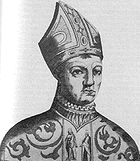
Here is a well-told history of this less-than-iridescent-Italian:
| He was one of the seven cardinals who, in May of 1408, deserted Pope Gregory XII, and, with those belonging to the obedience of Antipope Benedict XIII, convened the Council of Pisa, of which Cossa became the leader. They elected Pope Alexander V in 1409. | ||||||||||||||
| On the night of the 3rd May 1410, Pope Alexander V died suddenly of poisoning after having dinner along with Cardinal Baldassare Cossa. | ||||||||||||||
| The Italian cardinals elected the Pisan Baldassare Cossa (c. 1370-1419) to replace him. He called himself Pope John XXIII (1410-1415) | ||||||||||||||
| The vices of Cardinal Cossa, who had bribed electors, were well known to the cardinals and all of Italy, and nothing could show more plainly than this election the depth to which the papacy had sunk. Whether he was the son of an Italian pirate, as Dietrich says, we need not stop to consider. For 15 years he had been the head of the popes' corrupt financial system and had led papal troops and mercenaries with all the ferocity and looseness of commanders of that age. Dietrich adds that, as papal legate at Bologna, Cossa had exacted a personal commission from gamblers and prostitutes. On these matters, it is enough to say that the cardinals who elected him were, like all Europeans, aware of his reputation, and we remain content with the official ecclesiastical description of his character. | ||||||||||||||
| To end the schism and mutliple Popes, Emperor Sigismund agreed to convoke and preside at a Church General Council at Constance in 1414. It was an uncanny four-year event that defied understanding, and "the incontinence practised by the churchmen demoralised the city in which it was convened" (Samuel Edgar's The Variations of Popery, London, 1838, 2nd ed., p. 533). The priests employed 1,500 prostitutes, whom they called "vagrant strumpets" (ibid.), who refreshed them of an evening after their days of arguing in the Council. The sacerdotal fornicators, it seemed, were very liberal with their favours to the professional ladies. One courtesan, it is said, gained 800 florins, an immense sum in those days. | ||||||||||||||
| After hearing witnesses, the Council drew up a long indictment against John XXIII which ran to 54 Articles, and may be read in any collection of Church Council records available. He was later charged with rape, adultery, incest, sodomy and the murder of Pope Alexander V. After a brief trial he was found guilty, deposed, imprisoned and strangled within two years. The Romans pelted mud and stones at his coffin when it was brought to Rome. | ||||||||||||||
Thursday, December 10, 2009
Crozier Smack @ President Obama
This is from the Associated Press:
"Ought to be." This reminds me of a scene from Hamlet, in which Hamlet declares to his mother, "Seems, madame? Nay, it is. I know not 'seems.'" However, in this case it could be written, "Ought to be, sir? Nay, it is not. I know not 'ought to be.'"
The world is inhabited by mankind (and womankind, and childkind, and in-betweenkind). Mankind (etc.) is inherently sinful. Therefore, an ideal world, the world which "ought to be," cannot exist until the coming of the Messiah.
 No, not Obama. I'm talking about Jesus.
President Barack Obama entered the pantheon of Nobel Prize winners Thursday with humble words, acknowledging his own few accomplishments while delivering a robust defense of war and promising to use the prestigious award to "reach for the world that ought to be."
"Ought to be." This reminds me of a scene from Hamlet, in which Hamlet declares to his mother, "Seems, madame? Nay, it is. I know not 'seems.'" However, in this case it could be written, "Ought to be, sir? Nay, it is not. I know not 'ought to be.'"
The world is inhabited by mankind (and womankind, and childkind, and in-betweenkind). Mankind (etc.) is inherently sinful. Therefore, an ideal world, the world which "ought to be," cannot exist until the coming of the Messiah.
 No, not Obama. I'm talking about Jesus.
Photo Caption Contest
It's time for more of your keen insights, once again. The last time, I had a very tough time picking a winner. In fact, I didn't. If you submitted a caption, you earned your five prayer cards. Just email me (cleansingfire@live.com) and I'll send them out. I've got some for two of you already, and you'll be getting them soon. Mea culpa for not sending them off sooner. Life has a funny way of getting busy.
Anyways, you know the rules: keep it decent, keep it clean.

Anyways, you know the rules: keep it decent, keep it clean.

The Ten Most Common Liturgical Abuses
The following appeared in "This Rock" about ten years ago. Please give it a read.
THE TEN MOST COMMON LITURGICAL ABUSES
And Why They're Wrong
By Kevin Orlin Johnson
"Scandal" is a word much in the news these days, but it doesn’t really mean a shameful or sexual misdemeanor. "Scandal" in the Church’s vocabulary means just what it means in the Bible: a stumbling block, something that obstructs a person’s way to the faith (Matt. 18:6–9).
When the Mass is presented as something casual, entertaining, or improvisational, the whole point of it disappears. If the priest conducts himself as if Christ were not truly present in the Eucharist, why should the lay people in his parish think the Eucharist means anything? Why should they bother to go to Mass at all? Although census figures report that the Church in America is growing, only twenty-five percent of Americans who call themselves Catholic attend Mass regularly (down from seventy percent before the liturgical reforms following Vatican II). Worse, close to two-thirds of American Catholics say they don’t believe in the True Presence of Christ in the Eucharist—and many of those are among the twenty-five percent who still attend Mass.
A strong argument can be made that the loss of structure in liturgy caused an erosion of faith that in turn dealt a near-mortal blow to the American priesthood. Religious vocations, always sufficient in this country, began dropping off as the new order of the Mass was imposed without the necessary explanation and catechesis. Now many parishes have priests of other nationalities; we have become virtually a missionary country.
In an atmosphere of free-form liturgy, it’s up to the laity to know the laws about texts, gestures, the sacred objects used, and the proper conduct of the Mass; to obey those laws; and to see that the clergy obeys them, too. It’s up to us to call our priests back to due reverence when it comes to matters of taste that aren’t covered by law. It’s also important to know the difference between matters of law and matters of taste, because you have to know when you can insist and when you have to persuade. But by and large the laws binding on all priests are enough to bring back the reverence that is all too often missing.
If you question some liturgical practice at your parish, go to your nearest Catholic library or bookstore and have a look at these texts: the General Instruction on the Roman Missal (GIRM); the Code of Canon Law (its acronym, CIC, is derived from its Latin title, Codex Iuris Canonici); the Ceremonial of Bishops (CB); and the Ceremonies of the Modern Roman Rite (CMRR). The Documents on the Liturgy 1963-1979 (DOL) published by the Liturgical Press in Collegeville, Minnesota, includes many kinds of regulations in a single volume; so does The Liturgy Documents: A Parish Resource by Liturgy Training Publications at the Archdiocese of Chicago.
Check the directives from popes and Vatican congregations, particularly the Congregation for Sacraments and Divine Worship (CSDW). The Congregation publishes the answers to questions of interest in a periodical called Notitiae. These reinforcements of law are binding on all the faithful, and they go into greater detail than the laws themselves can; but mostly they repeat that the laws must be followed in this and every other instance.. Pauline Books & Media publishes many of these documents in inexpensive editions. And if you have a computer, check the Internet. You can easily find the complete texts of just about any Church document, free, including a good many articles from Notitiae.
Above all get a copy of the Order of Mass approved for use in the United States. Unfortunately, it’s hard to find the Order outside of huge altar books, which are expensive, or missalettes, which aren’t always accurate. Pangaeus Press in Dallas publishes an affordable edition of the Order.
When you have the applicable laws, write to the offending priest, citing the law, chapter, and verse and quoting it in full. Be objective and charitable; if you can, phrase your concerns as questions. An errant priest simply might not know what he’s doing, but whether he’s negligent or willful he might get obstinate or try to save face when his error is pointed out. If you get no satisfaction after a reasonable exchange, repeat your concerns to the priest in writing and send a copy to your bishop. It might end up being a longer and less pleasant process than you’d think. So be prepared to repeat the process and to keep the focus on the exact issue and the exact laws that it violates. As frustrating as the process might get, never lose your sense of charity. If your complaint comes to a successful conclusion, don’t crow about it; you haven’t won anything. The law has been fulfilled. The Blessed Sacrament has won.
Here are the most common abuses that you find in American liturgies today, with a few references to the laws that prohibit them. Check out those references and you’ll probably find laws on similar problems in your own parish.
1. Disregarding the prescribed text of the Order of Mass.
This particular abuse is perhaps the most widespread. You might think that the mere existence of a prescribed, official Order of Mass would be enough to show priests that they’re not to change or improvise, but it isn’t.
It’s not uncommon to find lectors eliminating male references to God in the Scripture readings or using the New Revised Standard Version of the Bible (or other inaccurate and unapproved ones) for the readings. You sometimes hear priests changing the words of the Nicene Creed—omitting the word "men" in "for us men and for our salvation" is the most common violation—or omitting the Creed altogether; saying aloud the prayers to be said quietly; or generalizing them, saying, for instance, "Lord, wash away our iniquities and cleanse us of our sins" (instead of "my" and "me").
You hear priests changing the tense and thereby the sense of phrases like "pray that our sacrifice is acceptable" instead of "may be acceptable" or "the Lord is with you" instead of "the Lord be with you." You hear them inviting the congregation to join in prayers specified as the priest’s alone. On occasion you even find priests winging it during the Eucharistic Prayer. And beyond the improvised words you’ll find a lot of flippant practices like using blue vestments for Marian feasts or gingerbread for the Eucharist at children’s Masses.
All of this is unlawful: "Regulation of the sacred liturgy depends solely on the authority of the Church, that is, on the Apostolic See and, as laws may determine, on the bishop. Therefore no other person, even if he be a priest, may add, remove, or change anything in the liturgy on his own authority" (Constitution on the Sacred Liturgy, 22, repeated in documents like Sacram Liturgiam; Tres Abhinc Annos; CIC 841, 846; and many other laws and regulations). Deviations from the Order are illicit, and when done intentionally they’re a grave offense both against the Church and the faithful who have a right to an authentic liturgy (Inaestimabile Donum, CSDW, April 3, 1980).
2. Interrupting the Mass.
The priest has no more right to interrupt the Mass from the sanctuary than you have to interrupt it from the pews. At the conclusion of Mass the lector or priest may make general announcements for the information of the parish; that’s specified in the Order. But no one may stop the Mass to make announcements, give financial reports, or make pleas for funds (Inter Oecumenici; Inaestimabile Donum). No one may stop the Mass for extra homilies (CSDW, Liturgicae Instaurationes 2(a)) and certainly not for other activities that are themselves unlawful, like skits or "liturgical dance."
3. Omitting the penitential rite.
This one is often misunderstood. A priest may choose to use the rite of blessing and sprinkling as given in the Order, in which case he must omit the "Lord have mercy." But a priest can never omit the penitential rite altogether, and he cannot give a general absolution during the penitential rite of the Mass as a substitute for individual Reconciliation (nor can he do so during a communal penance service [CIC 961]).
There are other options available to the celebrant elsewhere in the Order. The sign of peace, for instance, is optional (GIRM 112). If he includes it, though, the priest is not allowed to leave the sanctuary to exchange it with the congregation (GIRM 136).
4. Replacing or omitting the homily.
A priest may omit the homily only on weekdays that are not holy days. On Sundays and holy days he must give a homily (Sacrosanctum Concilium; CIC 767); it should relate the readings to one another and indicate how their message can be applied to the lives of his parishioners (Paul VI, Evangelii Nuntianidi; Inter Oecumenici). No priest can substitute announcements, financial reports, or pleas in place of the homily, nor add such things to it. Of course the Holy See isn’t going to make a fuss if he takes a couple of sentences at the end of the homily to make an announcement, tell how much is in the building fund, or mention a second collection.
Nobody who is not a priest, deacon, or bishop can give the homily at Mass; nobody who is not ordained can give a "talk" or "reflection" in place of the homily (CIC 766–768). Although some few groups like the Society for the Propagation of the Faith have a dispensation to speak on behalf of an order or mission at the time appointed for the homily, it is never permitted without that dispensation—not even if he (or, worse, she) gives a short homily before launching into the appeal. An ordained minister gives a homily structured on certain guidelines; that’s it.
Incidentally, he may not leave the sanctuary during the homily (GIRM 97).
5. Dictating posture.
There are parishes where the ushers will ask you to stand when you’re kneeling. Many churches are being built now without kneelers to discourage you from kneeling at all. This violates the law and does no honor to Christ nor to the martyrs who died rather than compromise the outward signs of their faith.
But if the celebrant and his ushers can’t mandate your posture, the law can, and it does. Everybody at Mass is supposed to be uniform in standing, sitting, and kneeling (GIRM 20), and there are universal rules about it. In this country you are still required to kneel during the Consecration, from after the end of the Sanctus until the Great Amen, even if there aren’t any kneelers (GIRM 21; Appendix to the General Instruction 21). You are required to bow or kneel at the words "by the power of the Holy Spirit" in the Creed (GIRM 98). You are required to genuflect whenever you pass the Eucharist, whether it’s in the tabernacle or publicly exposed except when in procession (GIRM 233; CB 71). And contrary to what you might see these days, the Eucharist’s tabernacle can’t be tucked out of the way. It should be "placed in a part of the church that is prominent, conspicuous, beautifully decorated, and suitable for prayer" (CIC 938).
After Communion, though, you’re free to stand, sit, or kneel as you choose.
6. Dictating the manner of reception of the Eucharist.
Vatican II never mentioned receiving the host in hand. But when some countries introduced the practice illicitly Pope Paul VI surveyed the world’s bishops to see if it should be allowed where it already existed. Rather than suddenly suppressing reception in the hand, the pope granted an indult intended to let the practice continue for a time in those areas where it already existed. Oddly enough, the bishops of the United States—where the practice did not exist—asked permission of the Holy See to introduce it here. Even more amazingly, they got it.
Still, universal Church law does not permit reception of the Sacrament in the hand, and John Paul II disapproves of the practice. The indult that allowed it specified that reception in the hand "must not be imposed" (CSDW, En réponse, 1969). Absolutely no priest or extraordinary minister of Holy Communion may refuse to administer the Eucharist on the tongue. Your right to determine which lawful manner you use is stated in the GIRM (Appendix for the United States, 240b).
The chalice cannot be left on the altar for people to pick up and drink from, not even during lightly attended Masses. The celebrant must distribute the Sacrament (United States Bishops’ Directory on Communion Under Both Species, 47). In fact, you’re not allowed to dip your host into the chalice; you have to take the cup and drink from it (DCUBS 45).
By the way, as to Eucharistic ministers, it’s important to note that they’re not supposed to help distribute the Sacrament routinely; only if there’s an unusually large number of people at Mass or if they’re sent to distribute extraordinarily outside of Mass, as to the sick. They are not supposed to assist at all when a priest is in attendance. Their office has nothing whatever to do with increased participation by the laity.
7. Ignoring rules for reception of the Eucharist.
The official statement of the rules for reception has recently been rewritten by the National Conference of Catholic Bishops, and unfortunately it’s pretty vague. But it still says clearly that "in order to be properly disposed to receive communion, participants . . . normally should have fasted for one hour," abstaining from food and drink except water or medicine.
The rewrite also goes to great lengths to say that non-Christians and Christians not in communion with the Church are welcome to come to Mass, but it’s not nearly so clear as it used to be on the fact that they may not receive the Eucharist. The new phrase "ordinarily not admitted to holy communion" makes some Catholics—and too many priests—figure that it’s all right for non-Catholics to take communion on special occasions like weddings or funerals, or if the non-Catholic is a prominent person like a government official or head of state. Exceptions are so few and given in circumstances so rare that it might have been more helpful to write simply "not admitted to holy communion"; but that’s for the bishops to say.
Naturally, you’re also required to be free from "grave" sin—what we all used to call "mortal" sin—which means Reconciliation before reception if you have committed a grave offense. And, no, the theology about what constitutes a grave sin has not changed, even if the terminology has.
8. Holding hands during the Our Father.
This is oddly widespread in the United States but it’s an illicit addition to the liturgy. The official publication of the Sacred Congregation for the Sacrament sand Divine Worship, Notitiae (11 [1975] 226), states the practice "must be repudiated . . . it is a liturgical gesture introduced spontaneously but on a personal initiative; it is not in the rubrics." And anything not in the rubrics is unlawful, again because "no other person . . . may add . . . anything [to] the liturgy on his own authority" (ibid).
Notitiae (17 [1981] 186)) also reaffirms that the priest may never invite the congregation to stand around the altar and hold hands during the Consecration. He stays in the sanctuary and we stay outside of it.
9. Performing liturgical dance.
Introducing dance into the liturgy in the United States would be to add "one of the most desacralized and desacralizing elements" leading to "an atmosphere of profanity, which would easily suggest to those present worldly places and profane situations. Nor is it acceptable to introduce into the liturgy the so-called artistic ballet because it would reduce the liturgy to mere entertainment" (Notitiae 11 [1975] 202–205).
10. Closing the holy water fonts at some seasons.
This is another innovation introduced spontaneously, and while holy water fonts are not integral parts of the Mass, emptying them during Lent or Advent is wrong no matter how you look at it. It’s not found anywhere in liturgical law, which is reason enough to suppose it to be forbidden. And it makes absolutely no sense. Holy water is a sacramental, so its right use carries with it a certain degree of forgiveness of sin and remission of punishment (Catechism of the Catholic Church, 1668; CB 110–114). There is no positive spiritual benefit in depriving the faithful of this legitimate aid at any time. In fact, removing it during penitential seasons is bizarre—that’s when we need it most.
By the way, because the penitential rite of the Mass and reception of the Eucharist remit venial sins, there’s no need to use holy water on the way out of Mass. Unless you’ve been up to some mischief in those few minutes.
As a postscript, I mention something that might be categorized as an abuse by the laity: parish-hopping. The Code of Canon Law provides that "The precept of participating in the Mass is satisfied by assistance at a Mass which is celebrated anywhere in a Catholic rite either on the holy day or on the evening of the preceding day" (1248, para. 1). Consequently, you can fulfill your Sunday obligation by going to a Mass anywhere. While your legal membership still remains in your local parish, the only times you are required to check in there are when you want to receive a special sacrament (e.g., marriage, confirmation) for which the priest needs the jurisdiction to administer.
Nevertheless, if you flee your home parish when things get ugly, you are in a sense not living up to your responsibility as a lay person. It is your duty to point out that liturgy is not entertainment. The liturgy is reality, the primary reality of this world. Christ is God, the reality on whom the secondary reality of creation depends ("through him all things were made," remember?). And the liturgy is the sacrament by which he comes personally and physically among us. The Mass is indisputably the single most important thing that human beings can do.
You have your part to fill in this great work. In fact, that’s what the liturgy is: the word is from the Greek meaning "the laity’s job." We are the Church itself, we are not the Church’s customers. Still less are we the Church’s audience. And we have a right to authentic liturgy (Inaestimabile Donum), liturgy exactly in line with all applicable rules and celebrated with a suitable sense of reverence (CIC 528). So if your priest offers sloppy, illicit, or even inappropriate liturgies, guess whose job it should be to pitch in and fix the problem?
Subscribe to:
Posts (Atom)


