Cleansing Fire Has Moved...

www.cleansingfiredor.com


All new blog posts will appear there, so update your bookmarks and live feeds. If you would like to post a comment to one of the older articles, please do so on the new site. Thank you, and God bless!

Friday, December 11, 2009

Thou Art Not Peter

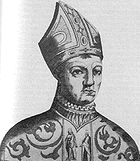
Iridescent Italian month marches on, and I thought we should take a moment to talk about the infamous Pope John XXIII. No, not Blessed John XXIII, but the anti-pope of the 15th century. There's a huge difference, folks. Remember? We talked about this - we're not sede-vacantists.


Here is a well-told history of this less-than-iridescent-Italian:


He was one of the seven cardinals who, in May of 1408, deserted Pope Gregory XII, and, with those belonging to the obedience of Antipope Benedict XIII, convened the Council of Pisa, of which Cossa became the leader. They elected Pope Alexander V in 1409.


On the night of the 3rd May 1410, Pope Alexander V died suddenly of poisoning after having dinner along with Cardinal Baldassare Cossa.


The Italian cardinals elected the Pisan Baldassare Cossa (c. 1370-1419) to replace him. He called himself Pope John XXIII (1410-1415)


The vices of Cardinal Cossa, who had bribed electors, were well known to the cardinals and all of Italy, and nothing could show more plainly than this election the depth to which the papacy had sunk. Whether he was the son of an Italian pirate, as Dietrich says, we need not stop to consider. For 15 years he had been the head of the popes' corrupt financial system and had led papal troops and mercenaries with all the ferocity and looseness of commanders of that age. Dietrich adds that, as papal legate at Bologna, Cossa had exacted a personal commission from gamblers and prostitutes. On these matters, it is enough to say that the cardinals who elected him were, like all Europeans, aware of his reputation, and we remain content with the official ecclesiastical description of his character.


To end the schism and mutliple Popes, Emperor Sigismund agreed to convoke and preside at a Church General Council at Constance in 1414. It was an uncanny four-year event that defied understanding, and "the incontinence practised by the churchmen demoralised the city in which it was convened" (Samuel Edgar's The Variations of Popery, London, 1838, 2nd ed., p. 533). The priests employed 1,500 prostitutes, whom they called "vagrant strumpets" (ibid.), who refreshed them of an evening after their days of arguing in the Council. The sacerdotal fornicators, it seemed, were very liberal with their favours to the professional ladies. One courtesan, it is said, gained 800 florins, an immense sum in those days.


After hearing witnesses, the Council drew up a long indictment against John XXIII which ran to 54 Articles, and may be read in any collection of Church Council records available. He was later charged with rape, adultery, incest, sodomy and the murder of Pope Alexander V. After a brief trial he was found guilty, deposed, imprisoned and strangled within two years. The Romans pelted mud and stones at his coffin when it was brought to Rome.


Thursday, December 10, 2009

Obama and the Catholic Bishops

Crozier Smack @ President Obama

This is from the Associated Press:

President Barack Obama entered the pantheon of Nobel Prize winners Thursday with humble words, acknowledging his own few accomplishments while delivering a robust defense of war and promising to use the prestigious award to "reach for the world that ought to be."

"Ought to be." This reminds me of a scene from Hamlet, in which Hamlet declares to his mother, "Seems, madame? Nay, it is. I know not 'seems.'" However, in this case it could be written, "Ought to be, sir? Nay, it is not. I know not 'ought to be.'"

The world is inhabited by mankind (and womankind, and childkind, and in-betweenkind). Mankind (etc.) is inherently sinful. Therefore, an ideal world, the world which "ought to be," cannot exist until the coming of the Messiah.

No, not Obama. I'm talking about Jesus.

Photo Caption Contest

It's time for more of your keen insights, once again. The last time, I had a very tough time picking a winner. In fact, I didn't. If you submitted a caption, you earned your five prayer cards. Just email me (cleansingfire@live.com) and I'll send them out. I've got some for two of you already, and you'll be getting them soon. Mea culpa for not sending them off sooner. Life has a funny way of getting busy.

Anyways, you know the rules: keep it decent, keep it clean.

http://www.novinite.com/media/images/2009-03/photo_verybig_101890.jpg

For When You've Had Enough

Please feel free to print these off and keep in your wallet or purse.


The Ten Most Common Liturgical Abuses

The following appeared in "This Rock" about ten years ago. Please give it a read.

THE TEN MOST COMMON LITURGICAL ABUSES

And Why They're Wrong

By Kevin Orlin Johnson

Before Vatican II there weren’t any surprises when it came to the Mass. Now in many parts of the United States you’ll find priests improvising as they go along. Even archbishops issue pastoral letters directing things at odds with liturgical regulations. As Pope John Paul II noted in a 1998 ad limina address to the American bishops of the western states, not all of the changes in the liturgy "have always and everywhere been accompanied by the necessary explanation and catechesis; as a result, in some cases there has been a misunderstanding of the very nature of the liturgy, leading to abuses, polarization, and sometimes even grave scandal."

"Scandal" is a word much in the news these days, but it doesn’t really mean a shameful or sexual misdemeanor. "Scandal" in the Church’s vocabulary means just what it means in the Bible: a stumbling block, something that obstructs a person’s way to the faith (Matt. 18:6–9).

When the Mass is presented as something casual, entertaining, or improvisational, the whole point of it disappears. If the priest conducts himself as if Christ were not truly present in the Eucharist, why should the lay people in his parish think the Eucharist means anything? Why should they bother to go to Mass at all? Although census figures report that the Church in America is growing, only twenty-five percent of Americans who call themselves Catholic attend Mass regularly (down from seventy percent before the liturgical reforms following Vatican II). Worse, close to two-thirds of American Catholics say they don’t believe in the True Presence of Christ in the Eucharist—and many of those are among the twenty-five percent who still attend Mass.

A strong argument can be made that the loss of structure in liturgy caused an erosion of faith that in turn dealt a near-mortal blow to the American priesthood. Religious vocations, always sufficient in this country, began dropping off as the new order of the Mass was imposed without the necessary explanation and catechesis. Now many parishes have priests of other nationalities; we have become virtually a missionary country.

In an atmosphere of free-form liturgy, it’s up to the laity to know the laws about texts, gestures, the sacred objects used, and the proper conduct of the Mass; to obey those laws; and to see that the clergy obeys them, too. It’s up to us to call our priests back to due reverence when it comes to matters of taste that aren’t covered by law. It’s also important to know the difference between matters of law and matters of taste, because you have to know when you can insist and when you have to persuade. But by and large the laws binding on all priests are enough to bring back the reverence that is all too often missing.

If you question some liturgical practice at your parish, go to your nearest Catholic library or bookstore and have a look at these texts: the General Instruction on the Roman Missal (GIRM); the Code of Canon Law (its acronym, CIC, is derived from its Latin title, Codex Iuris Canonici); the Ceremonial of Bishops (CB); and the Ceremonies of the Modern Roman Rite (CMRR). The Documents on the Liturgy 1963-1979 (DOL) published by the Liturgical Press in Collegeville, Minnesota, includes many kinds of regulations in a single volume; so does The Liturgy Documents: A Parish Resource by Liturgy Training Publications at the Archdiocese of Chicago.

Check the directives from popes and Vatican congregations, particularly the Congregation for Sacraments and Divine Worship (CSDW). The Congregation publishes the answers to questions of interest in a periodical called Notitiae. These reinforcements of law are binding on all the faithful, and they go into greater detail than the laws themselves can; but mostly they repeat that the laws must be followed in this and every other instance.. Pauline Books & Media publishes many of these documents in inexpensive editions. And if you have a computer, check the Internet. You can easily find the complete texts of just about any Church document, free, including a good many articles from Notitiae.

Above all get a copy of the Order of Mass approved for use in the United States. Unfortunately, it’s hard to find the Order outside of huge altar books, which are expensive, or missalettes, which aren’t always accurate. Pangaeus Press in Dallas publishes an affordable edition of the Order.

When you have the applicable laws, write to the offending priest, citing the law, chapter, and verse and quoting it in full. Be objective and charitable; if you can, phrase your concerns as questions. An errant priest simply might not know what he’s doing, but whether he’s negligent or willful he might get obstinate or try to save face when his error is pointed out. If you get no satisfaction after a reasonable exchange, repeat your concerns to the priest in writing and send a copy to your bishop. It might end up being a longer and less pleasant process than you’d think. So be prepared to repeat the process and to keep the focus on the exact issue and the exact laws that it violates. As frustrating as the process might get, never lose your sense of charity. If your complaint comes to a successful conclusion, don’t crow about it; you haven’t won anything. The law has been fulfilled. The Blessed Sacrament has won.

Here are the most common abuses that you find in American liturgies today, with a few references to the laws that prohibit them. Check out those references and you’ll probably find laws on similar problems in your own parish.

1. Disregarding the prescribed text of the Order of Mass.

This particular abuse is perhaps the most widespread. You might think that the mere existence of a prescribed, official Order of Mass would be enough to show priests that they’re not to change or improvise, but it isn’t.

It’s not uncommon to find lectors eliminating male references to God in the Scripture readings or using the New Revised Standard Version of the Bible (or other inaccurate and unapproved ones) for the readings. You sometimes hear priests changing the words of the Nicene Creed—omitting the word "men" in "for us men and for our salvation" is the most common violation—or omitting the Creed altogether; saying aloud the prayers to be said quietly; or generalizing them, saying, for instance, "Lord, wash away our iniquities and cleanse us of our sins" (instead of "my" and "me").

You hear priests changing the tense and thereby the sense of phrases like "pray that our sacrifice is acceptable" instead of "may be acceptable" or "the Lord is with you" instead of "the Lord be with you." You hear them inviting the congregation to join in prayers specified as the priest’s alone. On occasion you even find priests winging it during the Eucharistic Prayer. And beyond the improvised words you’ll find a lot of flippant practices like using blue vestments for Marian feasts or gingerbread for the Eucharist at children’s Masses.

All of this is unlawful: "Regulation of the sacred liturgy depends solely on the authority of the Church, that is, on the Apostolic See and, as laws may determine, on the bishop. Therefore no other person, even if he be a priest, may add, remove, or change anything in the liturgy on his own authority" (Constitution on the Sacred Liturgy, 22, repeated in documents like Sacram Liturgiam; Tres Abhinc Annos; CIC 841, 846; and many other laws and regulations). Deviations from the Order are illicit, and when done intentionally they’re a grave offense both against the Church and the faithful who have a right to an authentic liturgy (Inaestimabile Donum, CSDW, April 3, 1980).

2. Interrupting the Mass.

The priest has no more right to interrupt the Mass from the sanctuary than you have to interrupt it from the pews. At the conclusion of Mass the lector or priest may make general announcements for the information of the parish; that’s specified in the Order. But no one may stop the Mass to make announcements, give financial reports, or make pleas for funds (Inter Oecumenici; Inaestimabile Donum). No one may stop the Mass for extra homilies (CSDW, Liturgicae Instaurationes 2(a)) and certainly not for other activities that are themselves unlawful, like skits or "liturgical dance."

3. Omitting the penitential rite.

This one is often misunderstood. A priest may choose to use the rite of blessing and sprinkling as given in the Order, in which case he must omit the "Lord have mercy." But a priest can never omit the penitential rite altogether, and he cannot give a general absolution during the penitential rite of the Mass as a substitute for individual Reconciliation (nor can he do so during a communal penance service [CIC 961]).

There are other options available to the celebrant elsewhere in the Order. The sign of peace, for instance, is optional (GIRM 112). If he includes it, though, the priest is not allowed to leave the sanctuary to exchange it with the congregation (GIRM 136).

4. Replacing or omitting the homily.

A priest may omit the homily only on weekdays that are not holy days. On Sundays and holy days he must give a homily (Sacrosanctum Concilium; CIC 767); it should relate the readings to one another and indicate how their message can be applied to the lives of his parishioners (Paul VI, Evangelii Nuntianidi; Inter Oecumenici). No priest can substitute announcements, financial reports, or pleas in place of the homily, nor add such things to it. Of course the Holy See isn’t going to make a fuss if he takes a couple of sentences at the end of the homily to make an announcement, tell how much is in the building fund, or mention a second collection.

Nobody who is not a priest, deacon, or bishop can give the homily at Mass; nobody who is not ordained can give a "talk" or "reflection" in place of the homily (CIC 766–768). Although some few groups like the Society for the Propagation of the Faith have a dispensation to speak on behalf of an order or mission at the time appointed for the homily, it is never permitted without that dispensation—not even if he (or, worse, she) gives a short homily before launching into the appeal. An ordained minister gives a homily structured on certain guidelines; that’s it.

Incidentally, he may not leave the sanctuary during the homily (GIRM 97).

5. Dictating posture.

There are parishes where the ushers will ask you to stand when you’re kneeling. Many churches are being built now without kneelers to discourage you from kneeling at all. This violates the law and does no honor to Christ nor to the martyrs who died rather than compromise the outward signs of their faith.

But if the celebrant and his ushers can’t mandate your posture, the law can, and it does. Everybody at Mass is supposed to be uniform in standing, sitting, and kneeling (GIRM 20), and there are universal rules about it. In this country you are still required to kneel during the Consecration, from after the end of the Sanctus until the Great Amen, even if there aren’t any kneelers (GIRM 21; Appendix to the General Instruction 21). You are required to bow or kneel at the words "by the power of the Holy Spirit" in the Creed (GIRM 98). You are required to genuflect whenever you pass the Eucharist, whether it’s in the tabernacle or publicly exposed except when in procession (GIRM 233; CB 71). And contrary to what you might see these days, the Eucharist’s tabernacle can’t be tucked out of the way. It should be "placed in a part of the church that is prominent, conspicuous, beautifully decorated, and suitable for prayer" (CIC 938).

After Communion, though, you’re free to stand, sit, or kneel as you choose.

6. Dictating the manner of reception of the Eucharist.

Vatican II never mentioned receiving the host in hand. But when some countries introduced the practice illicitly Pope Paul VI surveyed the world’s bishops to see if it should be allowed where it already existed. Rather than suddenly suppressing reception in the hand, the pope granted an indult intended to let the practice continue for a time in those areas where it already existed. Oddly enough, the bishops of the United States—where the practice did not exist—asked permission of the Holy See to introduce it here. Even more amazingly, they got it.

Still, universal Church law does not permit reception of the Sacrament in the hand, and John Paul II disapproves of the practice. The indult that allowed it specified that reception in the hand "must not be imposed" (CSDW, En réponse, 1969). Absolutely no priest or extraordinary minister of Holy Communion may refuse to administer the Eucharist on the tongue. Your right to determine which lawful manner you use is stated in the GIRM (Appendix for the United States, 240b).

The chalice cannot be left on the altar for people to pick up and drink from, not even during lightly attended Masses. The celebrant must distribute the Sacrament (United States Bishops’ Directory on Communion Under Both Species, 47). In fact, you’re not allowed to dip your host into the chalice; you have to take the cup and drink from it (DCUBS 45).

By the way, as to Eucharistic ministers, it’s important to note that they’re not supposed to help distribute the Sacrament routinely; only if there’s an unusually large number of people at Mass or if they’re sent to distribute extraordinarily outside of Mass, as to the sick. They are not supposed to assist at all when a priest is in attendance. Their office has nothing whatever to do with increased participation by the laity.

7. Ignoring rules for reception of the Eucharist.

The official statement of the rules for reception has recently been rewritten by the National Conference of Catholic Bishops, and unfortunately it’s pretty vague. But it still says clearly that "in order to be properly disposed to receive communion, participants . . . normally should have fasted for one hour," abstaining from food and drink except water or medicine.

The rewrite also goes to great lengths to say that non-Christians and Christians not in communion with the Church are welcome to come to Mass, but it’s not nearly so clear as it used to be on the fact that they may not receive the Eucharist. The new phrase "ordinarily not admitted to holy communion" makes some Catholics—and too many priests—figure that it’s all right for non-Catholics to take communion on special occasions like weddings or funerals, or if the non-Catholic is a prominent person like a government official or head of state. Exceptions are so few and given in circumstances so rare that it might have been more helpful to write simply "not admitted to holy communion"; but that’s for the bishops to say.

Naturally, you’re also required to be free from "grave" sin—what we all used to call "mortal" sin—which means Reconciliation before reception if you have committed a grave offense. And, no, the theology about what constitutes a grave sin has not changed, even if the terminology has.

8. Holding hands during the Our Father.

This is oddly widespread in the United States but it’s an illicit addition to the liturgy. The official publication of the Sacred Congregation for the Sacrament sand Divine Worship, Notitiae (11 [1975] 226), states the practice "must be repudiated . . . it is a liturgical gesture introduced spontaneously but on a personal initiative; it is not in the rubrics." And anything not in the rubrics is unlawful, again because "no other person . . . may add . . . anything [to] the liturgy on his own authority" (ibid).

Notitiae (17 [1981] 186)) also reaffirms that the priest may never invite the congregation to stand around the altar and hold hands during the Consecration. He stays in the sanctuary and we stay outside of it.

9. Performing liturgical dance.

Introducing dance into the liturgy in the United States would be to add "one of the most desacralized and desacralizing elements" leading to "an atmosphere of profanity, which would easily suggest to those present worldly places and profane situations. Nor is it acceptable to introduce into the liturgy the so-called artistic ballet because it would reduce the liturgy to mere entertainment" (Notitiae 11 [1975] 202–205).

10. Closing the holy water fonts at some seasons.

This is another innovation introduced spontaneously, and while holy water fonts are not integral parts of the Mass, emptying them during Lent or Advent is wrong no matter how you look at it. It’s not found anywhere in liturgical law, which is reason enough to suppose it to be forbidden. And it makes absolutely no sense. Holy water is a sacramental, so its right use carries with it a certain degree of forgiveness of sin and remission of punishment (Catechism of the Catholic Church, 1668; CB 110–114). There is no positive spiritual benefit in depriving the faithful of this legitimate aid at any time. In fact, removing it during penitential seasons is bizarre—that’s when we need it most.

By the way, because the penitential rite of the Mass and reception of the Eucharist remit venial sins, there’s no need to use holy water on the way out of Mass. Unless you’ve been up to some mischief in those few minutes.

As a postscript, I mention something that might be categorized as an abuse by the laity: parish-hopping. The Code of Canon Law provides that "The precept of participating in the Mass is satisfied by assistance at a Mass which is celebrated anywhere in a Catholic rite either on the holy day or on the evening of the preceding day" (1248, para. 1). Consequently, you can fulfill your Sunday obligation by going to a Mass anywhere. While your legal membership still remains in your local parish, the only times you are required to check in there are when you want to receive a special sacrament (e.g., marriage, confirmation) for which the priest needs the jurisdiction to administer.

Nevertheless, if you flee your home parish when things get ugly, you are in a sense not living up to your responsibility as a lay person. It is your duty to point out that liturgy is not entertainment. The liturgy is reality, the primary reality of this world. Christ is God, the reality on whom the secondary reality of creation depends ("through him all things were made," remember?). And the liturgy is the sacrament by which he comes personally and physically among us. The Mass is indisputably the single most important thing that human beings can do.

You have your part to fill in this great work. In fact, that’s what the liturgy is: the word is from the Greek meaning "the laity’s job." We are the Church itself, we are not the Church’s customers. Still less are we the Church’s audience. And we have a right to authentic liturgy (Inaestimabile Donum), liturgy exactly in line with all applicable rules and celebrated with a suitable sense of reverence (CIC 528). So if your priest offers sloppy, illicit, or even inappropriate liturgies, guess whose job it should be to pitch in and fix the problem?
Wednesday, December 9, 2009

Are We That Stupid?


An excerpt from Bishop Clark's book, Forward in Hope:

The presence of and growth in numbers of lay ecclesial ministers
should be viewed as a complement to the ministry of the
ordained and not as corrosive of their authority or place in the
Church. (i.e. "Priests dance to my tune," from Sr. Sobala and the Barb Swiecki's firing of Fr. Peter Abas. Yeah - that's a compliment to the ministry of the ordained?)


I can count on one hand (one finger?) the amount of reverent and non-corrosive lay administrators.

Jolly Old St. Nicholas

Well, here's the latest from the Our Lady of Lourdes+St. Anne cluster. A friend of mine and one-time parishioner relates the following incident:

In past years, J___ L_____ would dress up as St. Nicholas and have the kids come in some weekend and tell them the real story of St. Nicholas. He'd always have on the miter, and he'd hold the crozier, and he makes a really great St. Nicholas. However, now that Sr. Joan's in charge, that's not enough. Instead of just having a "Breakfast with St. Nick" at St. Anne's, they decided to have a special cluster Mass in which St. Nicholas would preach the homily. So in they all processed, the altar servers, the lector, the good sister, St. Nicholas, complete with miter and crozier, and then the priest. Well, once they got up into the sanctuary, they all took seats. Right there in the sanctuary. So then the Mass goes on with the usual "fluff n' stuff" from Sr. Joan at every possible (and every impossible) point.

But then comes the homily. Fr. ______ got up and introduced it. Quickly. Then Sr. Joan got up and started her little whatever-you-call-it. Followed by St. Nicholas (aka random lay-person who's playing dress-up at Mass). That's just insane. When I talked to a priest, a solid priest, about it, he remarked, "monkeys aren't part of the Tradition."

Below two actual pictures of the perpetrator. I'd put him under Cleansing Fire interdict, but since he's a gen-u-whine bishop, I fear he'd try to do the same to us. Now don't get me wrong - I think that the whole notion of telling the true story is great. However, the line is crossed when someone goes from hosting a kid's breakfast to being a lay-preacher at the Holy Mass. That's completely out of line.


Tuesday, December 8, 2009

A Christmas Carol

Two things: 1 - we're not calling Bishop Clark a jerk. 2 - God bless us, everyone.


Try JibJab Sendables® eCards today!

All I Want For Christmas, Your Holiness, Is You

After a lengthy hiatus from video-making, I was finally able to resurrect my efforts. The movie-making program which I use has been exceedingly glitchy, and I've only begun to sort things out. Sorry for the dearth of amusement.


Anyways, here are the fruits of my labor last night. I hope you enjoy this early Christmas greeting!


High Mass this Sunday at St. Stanislaus

The Mass of Gaudete Sunday will be celebrated this coming Sunday, the 13th at St. Stanislaus Church at 1:30 p.m. The church is at the corner of Hudson Avenue and Norton Street.

The processional hymn, "O Come, O Come, Emmanuel" will be sung in English (imagine that!) as the altar boys and priest approaches the high altar. The ordinary and proper parts of the Mass will be sung in Gregorian Chant. The motets will be "Ad Te Levavi" and "Dixit Maria". The recessional hymn will be "O Come Divine Messiah".

All God's children are welcome to experience an exceptionally beautiful Mass in an exceptionally beautiful church. Confessions will be heard after Mass.

Dixit Maria by Hans Leo Hassler


In Latin:
Dixit Maria ad angelum:
Ecce ancilla Domini,
fiat mihi secundum verbum tuum.
In English:
Mary said to the Angel:
Behold, I am the handmaid of the Lord,
let it be done to me, according to your word.
Most of us would recognize Hassler for composing the hymn tune "O Sacred Head Surrounded".

Monday, December 7, 2009

What We Do, Why We Do It, And The Manner in Which It Is Done


The readings this past weekend were very well-suited for our purposes here at Cleansing Fire. I think, if we can be perfectly honest, that we were all driven here because of some measure of anger, sorrow, frustration, or disappointment. If we can then compound this honest realization with our current situation, we can then reasonably state what we, as Catholics, ought to do in this Babylonian exile.

Primarily, we need to find a safe place for Mass. Of course, seeing the frequency with which we talk of Our Lady of Victory and the Latin Mass Community, I think most of you have. But there are several of you, I know, who are outwardly angered by these abuses we discuss, but are either apathetic and caught up in enthusiasm, or are so afraid to tread on those sanctimonious toes of our administraitors (not a typo) that verbosity translates into inaction. I urge you, rouse yourselves from your fears and apathy and make a step in the proper direction - i.e. to the nearest parish that is not home to illicit and invalid Masses. It may be gut-wrenching to "make-the-break," but would you not rather have a wrenched-gut than a weeping soul?

In addition to this, I urge you, read the documents that are always mentioned in the debates here. They include (but are not limited to) Sacrosanctum Concillium, Redemptionis Sacramentum and the General Instruction of the Roman Missal, i.e. "GIRM." If we, as Catholics, have a clear and firm understanding of these documents, without reading into them personal opinions, biases, views, etc. then we can more readily combat the various manifestations of the heresy of liberalism which has taken root in the Diocese of Rochester and several other places.

A third bit is not to turn every injustice into a martyrdom. If everyone is grievously wounded by every single word uttered by any living person, schismatic, Traditional, or Traditionalist, then there's a serious problem. If you are asked to sing less boisterously, don't say "I've been slain by the liberals! My life-blood flows!" No. Don't be a liturgical drama queen. However, this doesn't mean we should be push-overs, either. We need to be firm and unyielding on important matters - i.e. Liturgy, the Sacraments, Morality. If your lay preacher or administraitor changes what kind of soap is in the restroom, don't make a fuss. By nitpicking every solitary detail of an administration, we lose credibility. We look like reactionary ninnies. Example: I love the soap which Nanacy DeRycke uses in the Good Shepherd restroom. Smells like lilies and freshly-washed albs.

Compounding these three things is a fourth - don't be embarrassed to ask questions, to "mess up" from time to time, to mis-speak or have some metaphorical typos. If you have no clue why the Church has used Latin for the majority of its life, ask us. We can't band together if we intimidate each-other into silence.

A major bit which we must all take to heart is a sense of humor and a sense of sin. Putting faces of various diocesan personalities into a video, or by saying "Fr. _____" did something bad at Mass, is NOT A SIN. We are obligated to expose liturgical abuses, and if we can do that and laugh at the same time, I tend to think Our Lord would be well-pleased. However, there is sin and we are all capable of it. It would be a sin to criticize a priest's character, i.e. "Fr. ______ is a flaming queer." Spreading rumors and half-truths is sinful, indeed. Try to avoid it. It is just as sinful, though, to turn a blind eye to heresy and irreverence towards Our Lord in the Blessed Sacrament. There's a difference between mockery and reprimanding with humor. I should think that we do the latter.

So, in short - find a good, reliable Mass. If you don't go there every week because of emotional connections to another parish, fine. Go to the "good" Mass when you're feeling discouraged or drained. Also, be literate in terms of Church documents. Don't be a liturgical drama-queen. We have enough of those. Ask questions. Have a sense of humor, and have a sense of sin. These are each imperative for those of us who actually hope to grow in spiritual maturity rather than wallow in reactionary cesspools of hate and malice.

Any Sopranos Out There?


If there is a soprano reading this, who isn't too bashful to sing with three other people, please email me. We lost a volunteer for the "music project."

Click here to email me.

Sunday, December 6, 2009

Help out with a survey

This survey is about Mass attendance and church music if you would like to take it. This is not a Cleaning Fire survey.

http://www.questionpro.com/akira/TakeSurvey?id=1464364

Saturday, December 5, 2009

For your Advent meditation

The Alma Redemptoris is one of four Marian liturgical antiphons sung at the end of Compline. It is sung to the Most Holy and Immaculate Virgin. The Alma is the appropriate antiphon during Advent. The other three antiphons are Ave Regina Caelorum, Salve Regina and Regina Coeli.


Latin
Alma Redemptoris Mater, quae pervia caeli
Porta manes, et stella maris, succurre cadenti,
Surgere qui curat, populo: tu quae genuisti,
Natura mirante, tuum sanctum Genitorem
Virgo prius ac posterius, Gabrielis ab ore
Sumens illud Ave, peccatorum miserere.
English
Loving Mother of our Savior, hear thou thy people's cry
Star of the deep and Portal of the sky!
Mother of Him who thee made from nothing made.
Sinking we strive and call to thee for aid:
Oh, by what joy which Gabriel brought to thee,
Thou Virgin first and last, let us thy mercy see.
A little history: This piece was written by Herman Contractus, aka Herman of Reichenau.
Born with a cleft palate, cerebral palsy, and spina bifida to a farm family. His parents cared for him until the age of seven, but in 1020 they gave him over to the abbey of Reichenau Island in Lake Constance in southern Germany; he spent the rest of his life there. He became a Benedictine monk at age twenty. A genius, he studied and wrote on astronomy, theology, math, history, poetry, Arabic,Greek and Latin. He built musical instruments and astronomical equipment. In later life he became blind and had to give up his academic writing. The most famous religious poet of his day, he is the author of the Salve Regina and Alma Redemptoris Mater.

Here is a little more about Herman. This was written by the late Rochester priest, Reverend Robert F. McNamara. http://www.irondequoitcatholic.org/index.php/Bl/HermannTheDisabled

12:10 p.m. Mass at OLV today FYI

I attended the 12:10 Mass at OLV and Father A. had the kiss of peace. It turned out to be a "wave of peace". I didn't see any handshakes but then again I don't have eyes in the back of head either.

Thursday, December 3, 2009

More idiocy from the USCCB

Come Chat With Us


We've added a "chat" feature to Cleansing Fire, over in the right hand column of goodies. You'll see it - it's a rectangle, turquoise button.

Hope to chat with some of you soon!

"Respect and Charity"

I received an email regarding my attempted post at the blog which is in the process of canonizing Sr. Sobala. If anyone has noted, the only comment which the person who runs it has permitted is one which sings the praises of schismatic dissent.

The comment I tried to post contained the following:
  • quotes from Sr. Joan Sobala and Bishop Clark, all verified
  • statistics regarding Mass attendance at Our Lady of Lourdes, St. Anne, St. Mary's Downtown
  • financial woes relating to the St. Anne cluster
  • all facts, no opinion
This is the email response I received:
I received your comment on my blog and wanted to respond to you personally. The blog is not a forum for personal attacks nor is it for airing personal grievances. Everyone who comments on the blog is expected to do so with respect and charity.
Sincerely,
Sister Julie


So, in the eyes of Sr. Julie, telling someone "you're wrong" is a "personal attack." In my eyes, it's more charitable to defend the Church, Christ's Bride, than it is to defend a woman who expresses clear contempt for the Church.


2 Corinthians 13-15
13 "...For such men are false apostles, deceitful workmen, masquerading as apostles of christ. 14 And no wonder, for Satan himself masquerades as an angel of light. 15 It is not surprising, then, if his servants masquerade as servants of righteousness. Their end will be what their actions deserve..."


Update 2:06 PM (by Dr. K):
A Nun's Life has recently closed comments on the Sr. Joan canonization post:

Adam and Steve to Remain "Friends Only"


From the Boston Globe:

N.Y. gay marriage measure defeated

Governor says vote lacked fortitude (Sort of like cheating on your wife, Gov. Paterson?)

ALBANY, N.Y. - The New York state Senate decisively rejected a bill yesterday that would have allowed gay couples to wed, providing a major victory for those who oppose same-sex marriage and underscoring the deep and emotional divisions surrounding the issue.

The 38-24 margin startled proponents of the bill, and signaled that political momentum, at least right now, has shifted against same-sex marriage, even in heavily Democratic New York. The vote followed more than a year of lobbying by gay rights organizations, who have poured close to $1 million into New York legislative races to boost support for the measure.

Senator Thomas W. Libous, the deputy Republican leader, said the public is gripped by economic anxiety and remains uneasy about changing the state’s definition of marriage.

“Certainly this is an emotional issue and an important issue for many New Yorkers,’’ said Libous, who represents Binghamton. “I just don’t think the majority care too much about it at this time because they’re out of work, they want to see the state reduce spending, and they are having a hard time making ends meet. And I don’t mean to sound callous, but that’s true.’’

The defeat, which followed a stirring and at times deeply personal debate, all but ensures the issue is dead in New York until at least 2011, when a new Legislature will be installed.

Since 2003, seven states, including three that border New York, legalized same-sex marriage. But in two of the seven, including Maine last month, voters have reversed the decisions of lawmakers or judges in referendums, and effectively outlawed gay nuptials.

In Albany yesterday, proponents had believed going into the vote that they could attract up to 35 supporters to the measure; at their most pessimistic, they said they would draw at least 26. They had the support from Governor David A. Paterson, who has publicly championed the bill, along with Mayor Michael R. Bloomberg, Assembly Speaker Sheldon Silver, and the Senate Democratic leadership.

The defeat revealed stark divides: All 30 of the Republican senators opposed the bill, as did most of the members from upstate New York and Long Island. Support was heaviest among members from New York City and Westchester County and among the Senate’s 10 African-Americans. Seven of the Senate’s 10 women voted for it.

Senators who are considered politically vulnerable also voted almost uniformly against the bill, including four first-term Democrats.

(Emphasis is solely mine.)

Wednesday, December 2, 2009

Iridescent Italian Month


You voiced your opinion, and it's now officially "Iridescent Italian Month." I'll be putting various Italian musical selections in the window to the right for the next month.

Praying for a Happy Death

I was just thinking about a few things today, and I thought you would enjoy hearing my little tidbits on death. Cheery, I know.

First of all, I found a quote from St. John Berchmans, a Jesuit, who said of his impending death, "I should like to die with my crucifix, my rosary, and my book of rules (catechism)."

Then I was browsing various rosaries, and I saw a picture of beads like this:

Note the skull - it's called a "momento mori," and is representative of the temporary victory of death, but the eternal victory we have in Christ's Passion. During the Middle Ages and into the Renaissance, the "momento mori" or "momento of death" was a popular gift for young suitors. Nothing quite so romantic as saying to your sweet-heart, "hey, honey, we're both going to die and decompose, but if you look at this skull you'll realize that ain't so bad!" These beads were quite often actually carved from real bones, be they of animals or humans. Again, romantic.

Then I got to thinking about praying for a happy death. So many people are a bit put-off when they see in their missal or prayer-book a section of "Prayers for a Happy Death." Many people, since the 60's and 70's onward, have had some kind of phobia about "death." I guess it has to do with the all-pervasive sense of relativism and idealism. Anyways, there are some very beautiful prayers asking for a happy death:

O Glorious St. Joseph, behold I choose thee today for my special patron in life and at the hour of my death. Preserve and increase in me the spirit of prayer and fervor in the service of God. Remove far from me every kind of sin; obtain for me that my death may not come upon me unawares, but that I may have time to confess my sins sacramentally and to bewail them with a most perfect understanding and a most sincere and perfect contrition, in order that I may breathe forth my soul into the hands of Jesus and Mary. Amen

O Jesus, while I adore Your dying breath, I beg You to receive mine. Since I do not know whether I shall have command of my senses when I depart from this world, I offer You even now my last agony and all the sorrows of my passing. I give my soul into Your hands for You are my Father and my Savior. Grant that the last beat of my heart may be an act of perfect love for You. Amen.

O Mary, my good Mother, after Jesus you are my hope and consolation. By your protection make me persevere in my firm determination to offend God no more and to prefer a thousand deaths to the deliberate commission of one mortal sin! Obtain for me the grace of final perseverance, and grant that I may remember to ask for it during the time of temptation and at the hour of death. You are the refuge of sinners and our perennial help. Our Lady of Perpetual Help, pray for me.
O Mother of Jesus, I offer you the last day, last hour, and last moment of my life, and everything that shall take place in me at that last moment--in honor of the last moment, hour and day of your life, and of all that occurred in you on that day. If it pleases you, unite me with all the holy and divine dispositions of your maternal heart and your pure soul. Grant that, by your merits and prayers, my last thoughts, words, acts, and breaths may be consecrated to the honor of the last thoughts, words, acts, and breaths both of your Son and of yourself. Grant that I may die loving Him with His holy love; that I may be utterly consumed and sacrificed to His glory; that my life may end with a last act of most pure love of Him. Amen.


So, after reading these, many people think, "okay, sure, but does it really change anything?" I can confidently say yes. Without a doubt. My grandmother used to say the prayer to St. Joseph which I posted above. She died in her sleep on Good Friday. God listens. You'd better believe it.

Veni, Veni, Emmanuel

In the last remaining hours between "Everything English Month" and whatever month you choose, I'll post a transcendent recording of this favorite Advent/Christmas hymn. Enjoy, all!


Some much need humor

Home Remedies
1. AVOID CUTTING YOURSELF WHEN SLICING VEGETABLES BY
GETTING SOMEONE ELSE TO HOLD THE VEGETABLES WHILE YOU CHOP.

2. AVOID ARGUMENTS WITH THE FEMALES ABOUT LIFTING THE
TOILET SEAT BY USING THE SINK.

3. FOR HIGH BLOOD PRESSURE SUFFERERS ~ SIMPLY CUT YOURSELF
AND BLEED FOR A FEW MINUTES, THUS REDUCING THE PRESSURE ON
YOUR VEINS. REMEMBER TO USE A TIMER.

4. A MOUSE TRAP PLACED ON TOP OF YOUR ALARM CLOCK WILL
PREVENT YOU FROM ROLLING OVER AND GOING BACK TO SLEEP
AFTER YOU HIT THE SNOOZE BUTTON.

5. IF YOU HAVE A BAD COUGH, TAKE A LARGE DOSE OF LAXATIVES.
THEN YOU'LL BE AFRAID TO COUGH.

6. YOU ONLY NEED TWO TOOLS IN LIFE - WD-40 AND DUCT TAPE.
IF IT DOESN'T MOVE AND SHOULD, USE THE WD-40. IF IT
SHOULDN'T MOVE AND DOES, USE THE DUCT TAPE.

7. IF YOU CAN'T FIX IT WITH A HAMMER, YOU'VE GOT AN
ELECTRICAL PROBLEM.

DAILY THOUGHT

SOME PEOPLE ARE LIKE SLINKIES - NOT REALLY GOOD FOR ANYTHING
BUT THEY BRING A SMILE TO YOUR FACE WHEN PUSHED DOWN THE
STAIRS.

Tuesday, December 1, 2009

I'm Here To Help

Taken from the Acts of the Apostasy blog.

This is an offer to all my friends at Voice of the Faithful (VOTF), Call to Action, Pax Christi, the LCWR and the Women's Ordination Conference (WOC) who anticipate attending the American Catholic Council in June 2011.

You know, I've been poking fun at your ideologies and beliefs since I started this blog. And while some of it has been justified...well, actually, all of it has been justified, but that's a whole other issue...I admit that you haven't always accepted my criticism with charity, and perhaps even quite possibly on occasion remotely you were less than Christian in your attitude.

So I want to make it up to you.

I realize that this council, planned for June 2011 in Detroit, is a big deal for you. It's your chance to resurrect the glory days of the Call to Action kick-off event in 1976, as well as a response to the call of the Spirit of Vatican II. I don't agree with any of the provisions of this American council, but that's besides the point. In the spirit of Christian fraternity, I'm here to help.

Eighteen months is a long time from now. A very long time. And given that a sizable percentage of your membership is...how can I say this politely?...really really old, it's quite possible that nature will dash many a dream, and that many may not live to see the dawning of this historic council. It's a cold hard fact of life.

When you factor in the possibility that the council many be postponed to 2012 (from the ACC website: "We also need to determine the physical details of our national meeting (including availability of space and speakers—and whether there is sufficient time to stage such an important event in the spring of 2011)—or whether we should provide more time for process and schedule a 2012 event"), the chance that many faithful catholics won't be around increases exponentially. I can only imagine the heartbreak and regret, that so many might not live to see this council.

Another possibility is that many will be too frail and infirm to travel to the Motor City, and thus miss out on coming to the table. Tragic. It just doesn't seem fair that the wisest, most venerable and most experienced of progressive catholics might be forced to remain behind while the impotentimportant work of the council gets done.

As you realize the pitiable situation in which you find yourselves, you're probably asking: "How can you help?" In a word, simply. In a few more words, by offering exclusive Council Attendance Insurance.

This is an exclusive offer open only to members of the aforementioned groups. AoftheA is making available to you and your members Council Attendance Insurance, whereby you purchase a non-refundable policy that guarantees your place at the table, even if you die. How, you ask? Because AoftheA will send someone in your place as a proxy in the event you are unable to attend, for any reason. Even if the council gets postponed until 2013 or beyond, you're guaranteed a voice.

For a modest one-time non-refundable fee of $1,500, AoftheA will screen for appropriate proxy candidates using the latest Briggs-Meyer Personality Test Typology methodologies. AoftheA assures you that individuals who most closely reflect your worldview will be on standby in the event you cannot make it to Detroit in 2011. AoftheA promises to not discriminate proxy candidates on the basis of creed, color or gender - just like you (unless the candidate is a straight white male who follows the Magisterium - we will categorically reject them, just like you!). In fact, AoftheA provides a 100% guarantee that our proxy candidates will be significantly less catholic than you could ever hope to be, thus ensuring the council will be be faithful to its mission, even if you can't be there.

Don't delay - you have little time! This is a limited time offer - you aren't going to live forever, you know. If you email AoftheA today, a packet will be sent to you via overnight mail. Complete the forms and send your check payable to "Council Attendance Insurance Policy", and then relax. Be assured that even if you can't attend the council, you'll be there in spirit. And someone just as non-catholic as you will be there to take up the call to...do something or other.

Advent Music

One of the great Advent hymns is "Lo He Comes With Clouds Descending". It deals with the second coming of Christ, one of the themes of Advent.

I chose two version of the same hymn. The first is from Lichfield Cathedral (dedicated to St. Chad and St. Mary) in Staffordshire, England. It is the only mediveal cathedral in England with three spires. Just think, at one time this magnificent cathedral was Roman Catholic. England is known as "Our Lady's Dowry".


The second version has the embedding disabled, so I can't put it up on the site. The instrumentation is very different than the first. The first is more choral and the second is more ornamented, especially with trumpets that herald the second coming of Christ. It gives me the shivers listening to it. Here, for your listening pleasure, is a link to it http://www.youtube.com/watch?v=08cGl44SWGM&feature=related

Monday, November 30, 2009

Photo Caption Contest

Sorry all. I completely forgot about our caption contests. I also forgot to send out the prayer cards to the last winner - you know who you are. They will be sent out promptly!

Anyways, the same rules apply: don't be mouthy, don't be stupid. Just put forth a hilarious comment which tickles me pink and I'll send out five Cleansing Fire prayer cards your way, or send them to the parish office of your choice.

Sticks and Stones

"You cannot please both God and the world at the same time, They are utterly opposed to each other in their thoughts, their desires, and their actions."- St. John Vianney


Well, that's been made perfectly plain in recent days, what with a sudden onslaught of anti-Cleansing Fire, anti-Magisterial, anti-Tradition posts by various people at various locations too diverse and too obscure to mention here. However, I think we should just meditate for a while on the message St. John Vianney has for us there.


If you're clueless as to the comments that were passed, consider yourself blessed.

Well, as they say, "onward and upward."

Orthodox Catholicism Rebounding!

Everything English Month Concludes

Well, it has been a month of absolutely anglophilic joys. (Anglophile = lover of English culture)

However, we must move on to something new. In this transition, though, I thought it would be fitting to share in video form one of my favorite hymns of all time. The piece is "I Vow to Thee My Country," and is absolutely stirring. The actual video below is from Princess Diana's funeral.

St. David, patron of Wales, pray for us!
St. Andrew, patron of Scotland, pray for us!
St. George, patron of England, pray for us!
St. Patrick, patron of Ireland, pray for us!
All holy English, Scottish, Welsh, and Irish men and women of God, pray for us!

Sunday, November 29, 2009

The conservative alternative to youtube

You can search without having to sort through pages of filth before you find what you are looking for. Try typing in "Christmas" and you'll see nothing but normal, decent results for your search. Bing, Snoopy, Donna Reed and Jimmy Stewart. I love it!
Popmodal is pretty new but sure to catch on. You won't see Eucharistic sacrilege. You will see the truth about abortion. Don't forget to comment and rate the videos you watch.

http://www.popmodal.com/videos

Local Church Sold to Moslems?


A very good friend of mine who knows about what's going on in the local diocese said St. Francis Xavier Church on Bay Street has been sold to the Moslems. Any body else hear this? Wasn't Saint Francis a missionary to convert people to Christ.

A Nod of the Miter Goes to . . .

Kelsey Grammer (aka "Frasier") for knowing how to perfectly satirize gay marriage and liberal republicans. This is from a couple years ago, but I thought it would be a nice "back to work" clip for you all.


Saturday, November 28, 2009

Anglicans - What Silly Folks

Q. Why can't Anglicans play chess?


A. Because they can't tell a Bishop from a Queen.

______________________________

On a side note: Everything English Month hasn't yet mentioned English comedy. The following clip is thoroughly secular and thoroughly hilarious. Disclaimer - the "s" word is used, but aside from that, 100% squeaky clean.

Thursday, November 26, 2009

1st Sunday of Advent in 1969

Forty years ago on 30 Nov 1969 the Novus Ordo went into force. It was the 1st Sunday of Advent.

I was in my late teens and found my way home from the Woodstock Festival in August. The whole revolutionary force of the 60s was at Woodstock. Revolution was in the air: sex/moral/authority/political/economic/educational/music revolution. I only went because a few friends and I had tickets ($5, I think). I had a horrible time. We were not even close to the stage. It rained all weekend. Everything was sloppy. We walked forever. By way of example: let's say Our Lady of Victory is where Woodstock was. We parked and walked from Chili Center.

I remember one ripped-up looking hippie was on the side of the road selling orange sunshine. He held it up and hawked it with the words "this will guarantee you to see Jesus". Because I came from a very ultra conservative, very orthodox Catholic background, I was absolutely shocked. Woodstock was where I heard colors and saw sounds.

But where was the bigger revolution: Woodstock or in the Vatican? Everything that I loved about the Mass was now changing. We changed the Mass and Western Civilization has not been the same since. As another side point, the day President Kennedy was shot in 1963 in Dallas, Texas was also the day the Second Vatican Council passed the constitution on the Sacred Liturgy. Which of those two events had the most impact on society?

Even though I was only 19 when the Mass changed in 1969, I was suspicious, very suspicious about the change. It flew in the face of what the sisters, priests and my parents taught me about the Catholic faith. But, nevertheless, I believe what they told me and still do to this day. Their major point was this: "in the Church things change and grow organically, never suddenly or overnight'. But now things were starting to change overnight and very fast.

I smelled a rat. A big rat. It seems after all these years since 1969, the truth about what the Council Fathers really had in mind for the Mass was nothing even close to what the Novus Ordo Mass is today. This whole rupture of tradition is a concept very foreign to the Catholic faith. All documents should be interpreted in light of tradition, but all around me I saw darkness. Imagine if we had the internet back then. I even went to Westbury, Long Island to attend Mass by Father Gommar dePauw at the Ave Maria Chapel. Today, praise God for Pope Benedict. He realizes that "you save the liturgy; you save the world".

Instead of becoming a radical hippie like most of my friends, I totally rebelled and became more conservative and orthodox. This first Sunday of Advent in 1969, the altar was turned around so the priest had his back to the tabernacle and honestly, it looked like he was bartending.

Why am I writing all this dribble? There are two podcasts from Father Zulsdorf's blog that I think would be worth listening to. They are about the changes in the Mass. Please take a listen to them, if you have the time. I believe Father Z sets the stage perfectly with what was happening in society at the time of the changes.

http://wdtprs.com/blog/2009/11/podcazt-93-40-years-ago-paul-vi-on-the-eve-of-the-novus-ordo/

A Hymn of Joyous Thanksgiving

First off, a happy Thanksgiving to all of you!

I think it's appropriate to share with you the following setting of the "Te Deum," what with it still being "Everything English Month." It was written by Handel after a stunning English victory over the French forces in Bavaria, at a town called "Dettingen." The king of England, George II, commissioned the piece to capture the true majesty of England and to render thanksgiving where it was due - God. This setting is in English, and starts with the words, "We praise Thee O God."

One again, enjoy the holiday!

Tuesday, November 24, 2009

Doubting the Common Sense of a New Europe

"We Are Dying Because We Wear the Cassock"

I found this amazing story on a blog set up to commemorate 20th Century Martyrs. It is very moving, and handily summarizes the nobility we find in our seminarians, priests, and religious who are truly devoted to God and His Church, not shameless self-promotion and feigned ignorance.

The incident below occurred in Spain during the Spanish Civil War.


On July 20, 1936, an anti-clerical mob attacked the house of the Claretian missionaries in Barbastro, shouting, “Death to the priests and destruction to religion! We have to finish with all of them!” The whole community gathered at the sound of the bell and met the crowd in the inner courtyard. The mob was shouting at the missionaries, looking for their hidden “weapons.” The priests replied, “There are no politics here, we are religious.”
Since they did not find any arms, they jailed the three superiors of the community in the municipal prison. The prison was a small and dirty room without proper ventilation. Imprisoned with the priests are some devout Catholics, who, like them, are imprisoned for the faith.
Calm and modest, the rest of the community were herded to the jail. Some of them had smiles on their lips. One person who saw them reverently genuflected and took of his hat “as if a Corpus Christi procession was passing by.” They were imprisoned in the auditorium of a former seminary of the Piarist Fathers.
The three superiors were put on a sham interrogation. They were asked, “Where do you hide your weapons?” Fr. Leoncio Perez showed his rosary and said, “I don’t have any other weapon other than this.” They were executed by a firing squad on August 2, 1936, with other priests and Catholics in Barbastro’s cemetery.
At the windows of the auditorium, people were gathering day and night shouting at the prisoners the most absurd slanders and wild threats. But they pardoned and prayed. Their guards entertained themselves every now and then by pretending to be about to shoot them. It is not hard to imagine the dreadful kind of life they had to live during those hottest months of summer. And it was only made worse by the fact that they were provided with a miserable ration of water. When one spiteful woman overheard the militiamen forwarding a request for water for the prisoners in the auditorium, she snarled, “Are you going to give them water? Why give them anything at all? Better to give them some lye, to make them hurry up!”
Prostitutes and other wretched women were sent in to the auditorium to seduce the prisoners, promising them freedom if they joined them. But the prisoners turned their backs on them and prepared themselves for martyrdom. Many of the girls would leave in ill humour because of their failure to seduce anyone. Among those prostitutes was a woman called Trini “la Pallaresa”, who was obsessed with one of the seminarians, Esteban Casadevall. Trini openly stated, even in front of the other imprisoned religious, that it was a 'real pity' to see that such a good looking seminarian, 'such a handsome young kid' should have been led astray like this, and that she would try to free him from death if she could talk to him alone. She vowed that she would be on the watch for him whenever he left the auditorium. Casadevall, who was exemplary for his modesty and was seemingly unaware of all this, came and went “without paying the least attention to her or even batting an eye at the flattering words and gestures she directed toward him.”
One seminarian, Salvador Pigem, was offered freedom. He asked his captors, “Will you save me with all my companions?” The captor replied, “No, only you.” “Well then, I don’t accept your offer. I prefer to die a martyr with them.”
The captives stood firm in piety and purity. They spent their time praying together in small groups, and took advantage of every opportunity to confess and receive Holy Communion. They begged God to forgive their persecutors. They also scrawled messages to be communicated to the outside world, on scraps of paper, on the walls, on wooden planks, and even on the lid of the piano. “We die happy,” they wrote. “We ask God that our blood may not give rise to vengeance. We are dying because we wear the cassock.” “Workers, we martyrs die loving and forgiving you. Many of us have offered our lives that you may be saved.” “Lord, forgive them.” “Father, save them, for they know not what they do.”
On August 12, the six eldest Claretians were killed in the cemetery of Barbastro. Before the firing started, the martyrs had been offered one last chance to apostatise. Afterwards they received the coup de grace in the temple. Then they were left there to bleed to death, so a not to soil the truck or the roadway with blood. The other seminarians in the auditorium were filled with hope and gladness, since their time to die for Christ is drawing near.
The next day, 20 seminarians were called out. On hearing their names, they jumped and hugged each other with joy. They kissed their ropes and forgave their executioners. Those whose names were not called looked on with respect. The seminarians were loaded on to the truck which was heading for the place of execution. At the start of the journey, joyful shouts and songs of praise turned the scene into an impressive manifestation of faith. However, they were silenced by infuriated guards who beat them with rifle butts. At the place of execution, they were told, “For the last time, if you renounce your religion and come with us, we will spare your lives!” The seminarians answered, “Never do we! Heaven as close and sure as it is now. Long live Christ the King!” The seminarians in the auditorium heard the shots which rang out from the cemetery. They began praying for their brothers and rejoiced for their martyrdom.
That morning, two Argentinean seminarians were singled out from the prisoners and released. One of the would-be martyrs, Ramon Illa, told them, “How poor and unhappy you two must be, not to be able to die as martyrs for our Lord.” However, it was thanks to the two seminarians that the story of the martyred community of Barbastro was made known.
The remaining seminarians were told that they were going to be killed on the 14th, but it didn’t happen as they were told. Instead, they were to be killed on the next day. It was a fitting day for the seminarians since it was the feast day of the Assumption. On the dawn of August 15, the truck in which the seminarians would be loaded parked in front of the auditorium. When the names of the next twenty prisoners who were going to be killed on that day were called out, they were asked, “Where would you rather go, to the front and fight against fascism, or to the firing squad?” Knowing that fighting with the republicans would mean abandoning their faith, they replied, “We would rather die for God and for Spain.” They were bound with wires and tourniquets by pair. They were bound tightly that their wrists bled, but none of them complained. Before they were loaded in the truck, they were given again the offer to fight with the fascists and renounce their faith, but everyone remained silent. When the truck reached the place of execution, the seminarians were beaten with rifle butts. As they were being shot to death, a witness says “they never stopped repeating ejaculatory prayers.” After the execution, one witness of the execution reported hearing the executioners saying, “The young seminarians could all have been saved, if they'd only taken off those cassocks and denied their faith.”
On August 18th, a Tuesday, the last two seminarians, Jamie Falgarona and Atanasio Vidaurreta, were killed for their faith. The two seminarians had been staying as patients in the local hospital, along with Brother Joaquin Munoz, since the evening of July 20th. The doctors kept them there as long as they could, because they knew that as soon as they left they would be condemned. Finally, on the evening of August 15th, they had to release them, and they went off to occupy a cell in the municipal jail. Brother Munoz, who was disabled by different ailments, was released. The death of the last two brothers completed the glorious crown of the fifty-one Claretian Martyrs of Barbastro.

St. Cecilia, Pray For Us!


Well, it looks as if the greed of others will prevent our further musical exploration of Everything English Month. I was notified a couple days ago that we could continue having music files on the blog if we paid the file hoster $50.00 per month, per omnia saecula saeculorum. I do not feel so inclined, especially since after I joined for a three-day trial at a lesser price, our bandwidth was not increased as had been promised. Until such a time as I find a sensible alternative for embedded music in the blog, we'll just post various YouTube videos.

St. Cecilia, patron of music and musicians, look after us and pray that we may find a solution to this problem of such a dearth of culture.

Monday, November 23, 2009

Latte Actually Means Something


Random rant alert:

When I walked into a cafe today, I ordered something I always get when I'm feeling in need of Eastern comforts, namely a "chai latte." (Part chai concentrate, part steamed milk.) I'm not entirely certain how many of you are as cafe oriented as I am, but I think we can all agree with our meager knowledge of the beverage industry that a chai latte does not dictate 12 ounces of steamed concentrate as the sole ingredient. Is it really that difficult to read the instructions printed right there on the box of concentrate?

For this reason I am putting ignorant baristas under Cleansing Fire interdict.

There will be blood.

Sunday, November 22, 2009

Nod of the Miter Goes To . . .


Fr. Ronald Antinarelli for bringing a halt to the oft-abused and oft-irreverent practice of the "Kiss of Peace." The reason: the "rampant flu pandemic." Something tells me that the flu will not ever go away, in the eyes of the administration of Our Lady of Victory in Rochester.

And thanks be to God for that.

Saturday, November 21, 2009

Bringing a Novus Ordoite to the Gregorian Rite Mass

This was written by a friend of mine. I hope you enjoy it.

I'll have to do what when I come in? Be quiet? Be quiet for what?! What do you mean people will be praying? Can't they do that at home before they leave the house? Sheesh.
Of course I have a rosary. Didn't you see it hanging from my rearview mirror? That's not what it's for? I'm supposed to pray with it? Before Mass? To get what? An Indulgence? What's an Indulgence?
I don't hear the piano. Where's the piano player? There's always a piano player warming up. Somebody shot the piano player!
Hey, what are all those people doing standing in line over there? "Confession"? Oh, you mean Reconciliation. How come they're doing that now? It ain't Easter ya know. Duh.
I can't wait for the before, during and after public service announcements, you know why? Becau... What?? You don't have those either?? But I wanted them to announce my birthday! How will the people know it is my birthday?!?
What do you mean no homily? You mean I have to sit through a sermon? But what if he says something.....you knowww...unpleasant?! Well,... if his jokes are good I guess it'll be okay.
Don't shout out my responses? Pray from the heart?? Enter the "Sacred Mystery"?? "Christ present on the Altar"?? Well, that's just great.
You don't have liturgical dancers? Saaaaaaaayyyyy....what kind of Church is this anyway??
What about the Sign of Peace? We still get to do that, right? I mean I got my eye on a real cutie and I can't wait to...what's that you say? No Sign of Peace? You mean I don't get to do no huggin' and kissin'? Dang. There goes my chance for happiness.
I don't even get to sing???!!? First no piano player and now this. I mean...whatdya expect me to do for an hour??

Friday, November 20, 2009

TLM Reminder

This Sunday, 1:30 p.m. at St. Stanislaus Church, corner of Hudson Avenue and Norton Street, the timeless, ageless Tridentine Latin High Mass will be celebrated. Father William Lawrence, FSSP, will preach. Father Lawrence is a native of the Rochester diocese and is priest with the Priestly Fraternity of St. Peter. He is a very good and pointed speaker.

We have plenty of room. So, by all means bring your children, grandchildren, friends, neighbors, nieces, nephews, aunts, uncles, grandma and grandpa, even great-grandmothers and great-grandfathers too. "All are welcomed in this place."

If this is your first time at a Tridentine Latin Mass, just attend. Don't try and follow along in the red missals. Just take it in. Stop! Look and Listen! Even smell the incense.

If you sit near the center aisle you might get sprinkled with Holy Water during the Asperges. The Asperges happens before Mass. It is not a part of the Holy Sacrifice; but a blessing of the people. It's all part of the true Catholic experience that so many Catholics have been denied for years.

This is OUR heritage. Our patrimony. This is how many of your parents and grandparents worship for centuries. The Mass in the Extraordinary Form as it is called, traces its origins back to the Mass of the Pre-Sanctified from Good Friday.

Our local "Schola Roffensis" will chant the Propers parts of the Mass and our Polyphonic Choir will sing the Ordinary parts. The Propers change from day-to-day; the Ordinary parts do not change from day-to-day. We will be singing the complete "O Magnum Mysterium" Mass by Tomas Luis Victoria. There will be two motets. One during the Offertory and the other during Holy Communion.

Communion is received kneeling at the altar rail and on the tongue ONLY and there is no need to say "Amen". The priest will recite "Corpus Domini nostri Jesus Christi custodiat animam tuam in vitam aeternum. Amen" over each person before he puts the Sacred Host on your tongue. It is ever so reverent. It's easy to get use to. Imagine you get time to kneel at the altar rail before the priest gets to you. This gives you time to pray and recollect yourself before receiving Our Lord in the Eucharist. No long, cattle lines going up the aisle for Holy Communion. And then, the even better part is, right after you receive Holy Communion, you can kneel at the rail for awhile longer and pray before you leave and return to your pew to give thanksgiving to Our Lord.

Come and see what you have been missing all these years.

Yes, I forgot.

We have an elevator for handicapped accessiblity , security guards who are very friendly and courteous, inside "flush" toilets.

There is even a large narthex in case the "kids" act up and you want to sequester them. The narthex is the area between the front door of the Church and the door before you go into the church itself. There is a very well stocked book table that is manned (can I use that word?) by some very nice guys and gals (can I use those words too, or am I being sexist?).

Parking: You can park in back of the church or, on Hudson Avenue in front of the church or across Hudson Avenue in the parking lot. The bus even stops in front of the church. Our guards, Clint and Brad, patrol all over the grounds while Mass is going on. They would gladly walk you to your car if you would like that too.

Music: Our Polyphonic Choir is under the very capable direction of Mr. John Morabito, an Eastman School of Music student studying organ. He's been in some major world-wide organ competitions. And our director of the Schola is Mr. Joel Morehouse, a devoted student of Gregorian Chant and a very good organist and teacher too. We hope not to hit any wrong notes, but we're human too! And we LOVE being Catholic.

And, yes, this Mass is approved by the local Diocese of Rochester.

YA'LL COME NOW!!!

or as it is said in Latin

ADESTE FIDELES

CCHD - It's worse than we thought

Another horror story about CCHD.

To Bishop Clark, From His Humble Servants:

"Prince of degredations, bought and sold,
These verses, written in your crumbling sty,
Proclaim the faith that I have held and hold,
And publish that in which I mean to die."